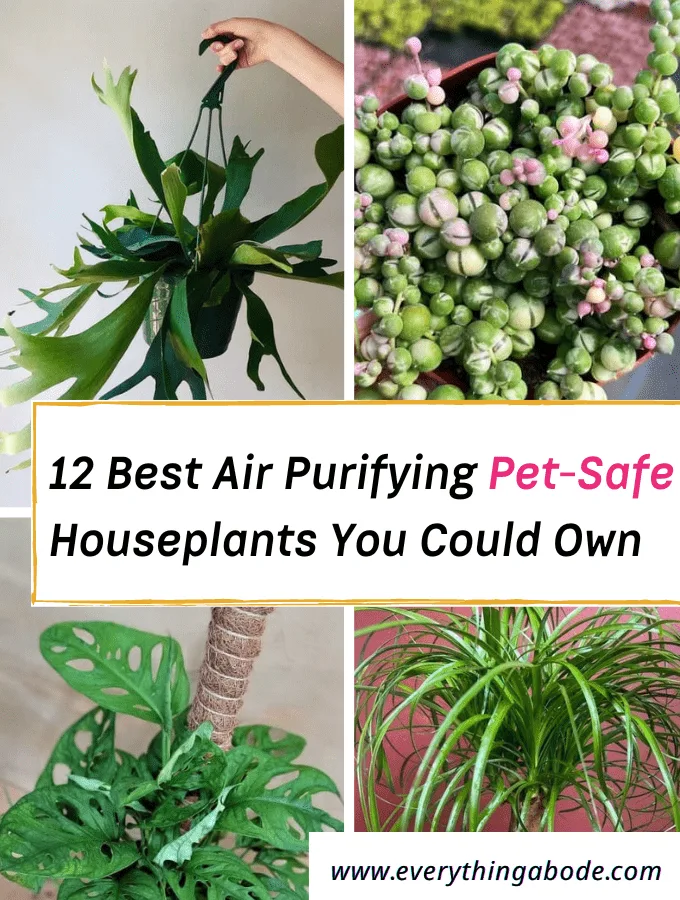
Pet-safe houseplants for air purifying the home. Are you looking for beautiful indoor houseplants that are great for your pet or pets? Check out this list of the best pet-safe houseplants for indoors.
Your pet is part of your family, so you want to ensure they’re safe and healthy.
Adding a few greenery accents and houseplants is a great way to help purify the indoor air; plus, there are plenty of beautiful plants that can do that without causing harm to pets.
However, it’s also important to note that even though some houseplants are nontoxic to pets if they are ingested lots, it could still make your pet sick.
So take the necessary precautions to keep your furry friends happy and healthy in your home.
Nonetheless, these are the best and most uncommon pet-safe houseplants you can safely bestow in your home alongside your furry friend.
Sure, many house plants are non-toxic for pets, but these are the most beautiful and extremely easy to care for (with caring instructions included!).
So let’s look at the 12 best and most uncommon houseplants that are also pet safe!
1. Friendship Plant (Pilea Involucrata).
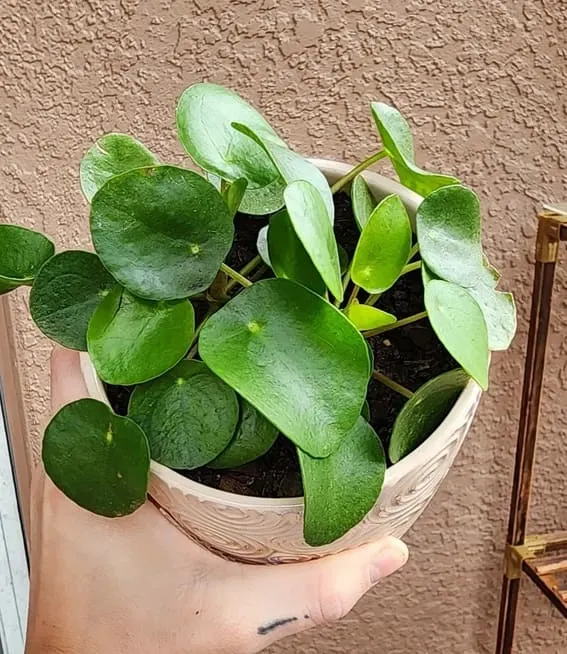
This is a great trailing plant with leathery leaves and a unique texture, but why is the Friendship Plant (Pilea involucrata) plant safe for pets?
The Friendship Plant has several features that make it safe for pets. First, it is not toxic to cats or dogs. Additionally, it does not produce any seeds or fruits, which makes it impossible for pets to ingest.
This plant also has a low water requirement, so there is little risk of pets drinking from the plant and potentially becoming ill.
Care Instructions For The Friendship Plant (Pilea Involucrata):
1. Water: Water the Friendship Plant thoroughly when the top inch of soil is dry. Make sure to allow the excess water to drain away and avoid sitting water.
2. Sunlight: Place the Friendship Plant in a bright spot with indirect sunlight.
3. Temperature: Keep the temperature between 65-80°F.
4. Humidity: Increase humidity around the Friendship Plant by misting the leaves with a spray bottle.
2. Prayer Plant (Maranta Leuconeura).
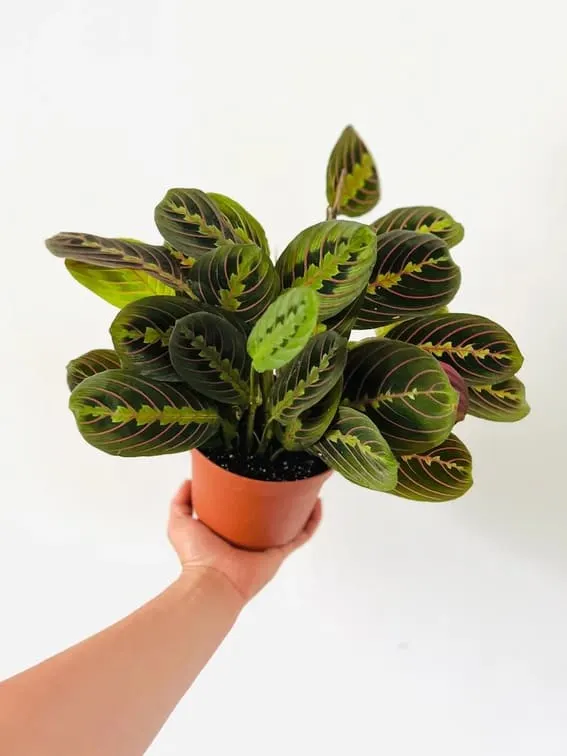
This is a very cool-looking plant with colorful leaves that fold up at night as if in prayer.
The Prayer Plant (Maranta leuconeura) is pet safe because it is non-toxic to cats and dogs.
The plant’s leaves and stems contain no poisonous or irritant compounds as well.
Care Instructions For The Prayer Plant (Maranta Leuconeura):
1. Water: Water your Prayer Plant when the soil’s top 1-2 inches (2.5-5 cm) are dry. Water thoroughly until the excess water drains out of the bottom of the pot.
2. Light: Prayer Plants require bright, indirect light but can also tolerate some shade. Avoid direct sunlight, as it can scorch the leaves.
3. Humidity: Prayer Plants prefer high humidity. If your home is dry, you can mist the plant, place the pot on a tray filled with pebbles and water, or use a humidifier.
4. Temperature: Prayer Plants prefer temperatures between 65-75°F (18-24°C).
3. Ponytail Palm (Beaucarnea Recurvata).
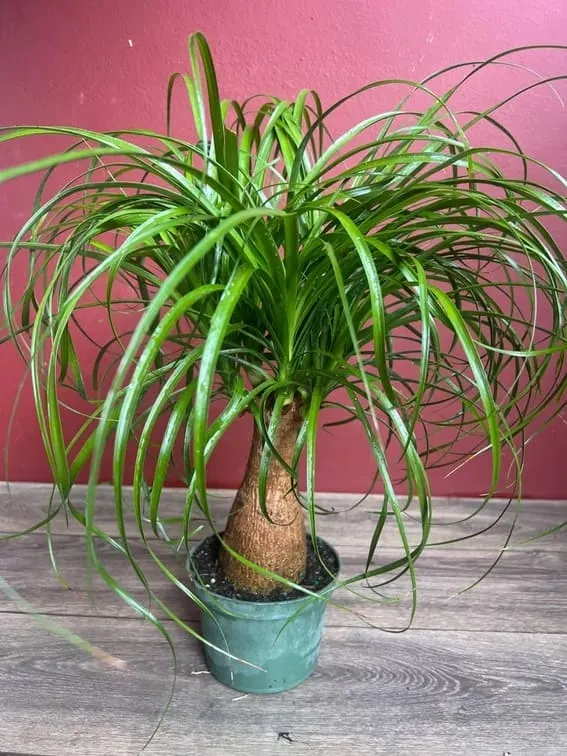
This palm-like plant with a thick, bulbous trunk and long, slender leaves cascading downward is another uncommon indoor plant.
The Ponytail Palm (Beaucarnea recurvata) is a safe pet plant because it is non-toxic to cats and dogs.
This plant can also help to remove toxins and pollutants from the air, which can help to improve the air quality in your home.
Additionally, this plant is relatively low maintenance. It can withstand periods of dryness, making it a good choice for pet owners who can only sometimes water their plants.
Care Instructions For The Ponytail Palm (Beaucarnea Recurvata):
1. Water: Water the Ponytail Palm when the top inch or two of soil is dry. The soil should dry out completely between waterings to prevent root rot.
2. Light: Ponytail Palms can tolerate bright light but prefer indirect or partial shade.
3. Fertilizer: Fertilize your Ponytail Palm every two months during the growing season with a balanced fertilizer.
4. Humidity: Ponytail Palms prefer humid environments, so mist the plant as often as you can.
4. String Of Pearls (Senecio Rowleyanus).
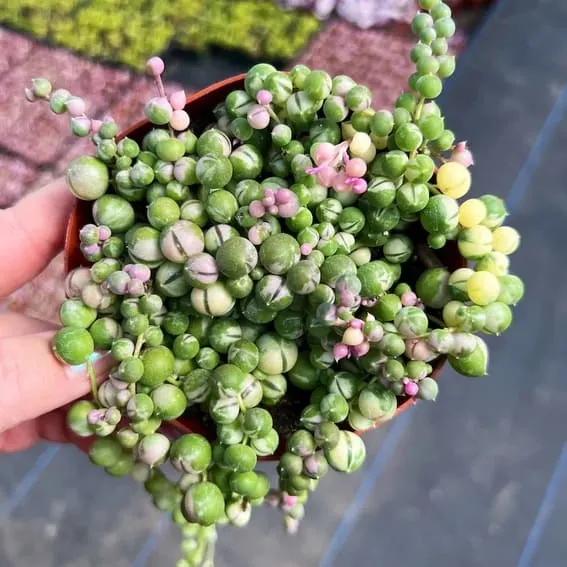
This is a gorgeous trailing houseplant/succulent with round, bead-like leaves that resemble pearls.
The String of Pearls (Senecio rowleyanus) plant is safe for pets because it is non-toxic to cats, dogs, and most other animals. It is not known to be poisonous to animals if ingested, so it is a safe choice for households with pets.
Care Instructions For The String Of Pearls (Senecio Rowleyanus):
1. Provide bright, indirect light: String of Pearls will thrive in bright, indirect light. Place your plant near a window that receives plenty of light but not direct sunlight.
2. Water regularly: Water your String of Pearls when the soil is dry to the touch. You can check this by poking your finger an inch into the soil.
3. Repot when necessary: If your String of Pearls is starting to outgrow its pot, it’s time to repot. Choose a pot one size larger than the current one and use well-draining potting soil.
4. Prune regularly: Prune your String of Pearls regularly to encourage it to grow.
5. Red Aglaonema (Aglaonema Siam Aurora).
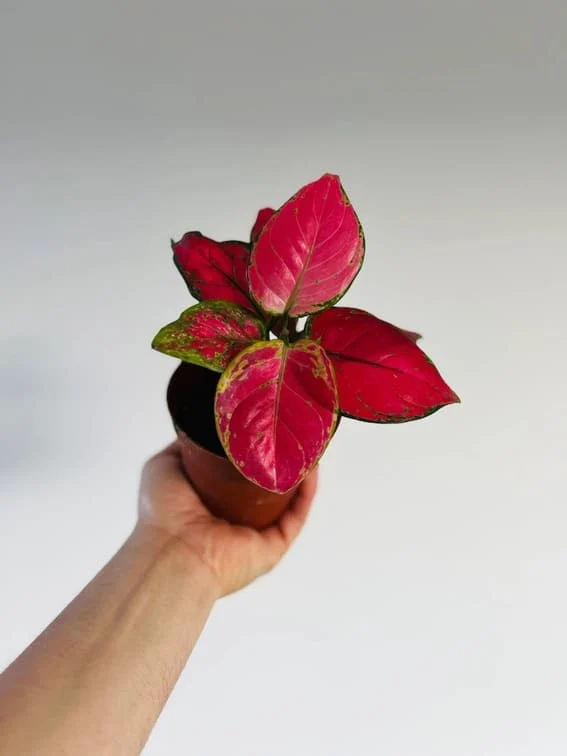
This is another plant with stunning red and green variegated leaves that thrive in low-light conditions.
The Red Aglaonema is an excellent indoor houseplant for pets because it is non-toxic, pet-friendly, and beautiful.
It is easy to care for, requires minimal attention, and can thrive in bright and low-light environments.
This plant is also known for its air-purifying properties, helping filter out air pollutants.
Care Instructions For Red Aglaonema (Aglaonema Siam Aurora) Plant:
1. Light: Aglaonema Siam Aurora prefers bright, indirect light but will tolerate low light.
2. Water: Water when the top inch of soil feels dry. Be sure to let the excess water drain away.
3. Temperature: Keep the temperature between 65-80°F (18-27°C).
6. Watermelon Peperomia (Peperomia Argyreia).
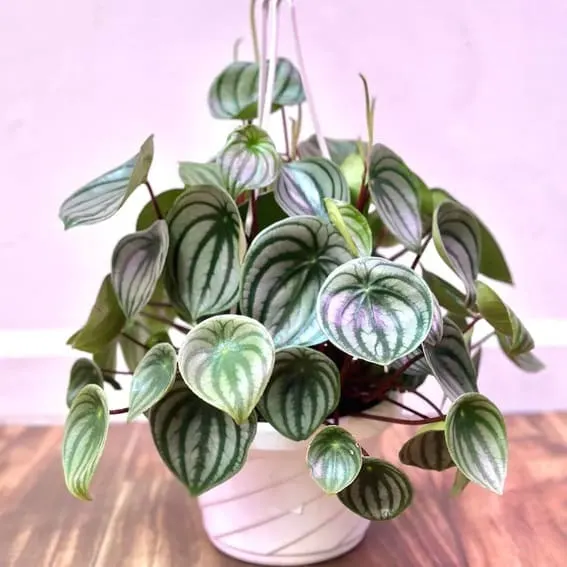
Another excellent pet plant is the watermelon plant, with its distinctive leaves that resemble watermelon rinds that are safe for your furry friend.
The Watermelon Peperomia (Peperomia argyreia) is a great pet plant because it is non-toxic to cats and dogs.
It is also easy to care for and an attractive plant with its bright green foliage and silver stripes.
Care Instructions For Watermelon Peperomia (Peperomia Argyreia) Plant:
1. Water: Water your Watermelon Peperomia when the top 2-3 inches of soil is dry. This plant prefers slightly dry soil, so it is best to water lightly and only when needed.
2. Temperature: Watermelon Peperomia likes temperatures between 65-80°F. They can tolerate cooler temperatures but should not be exposed to temperatures below 45°F.
3. Humidity: Watermelon Peperomia likes high humidity levels, so keeping them in a humid environment is best. This can be achieved by misting the plant regularly or placing it in a tray of moist pebbles.
4. Sunlight: Watermelon Peperomia enjoys bright, indirect light. Direct sunlight can scorch the leaves, so place the plant in a spot that receives light but not direct sunlight.
7. Nerve Plant (Fittonia).
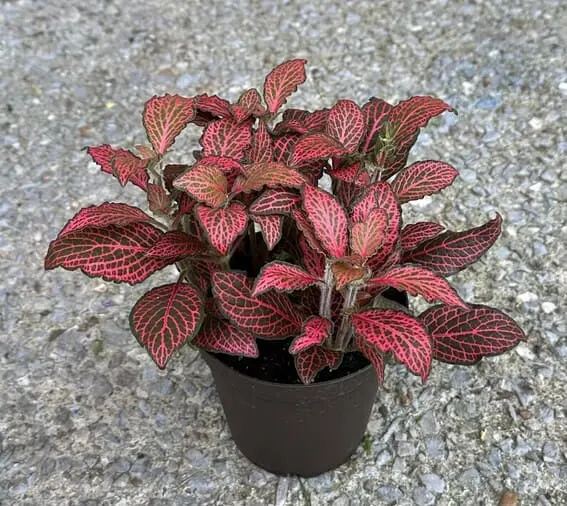
This next plant is a striking houseplant because its bright, vibrant green and pink leaves are veined like a network of nerves.
The Nerve Plant (Fittonia) is an excellent plant for pets because it is non-toxic and safe for animals, is low maintenance, and provides good oxygen and natural filtration, making it a tremendously good air-purifying plant.
Additionally, it is an aesthetically pleasing plant that can brighten up any room in your home!
Care Instructions For Nerve Plant (Fittonia) Plant:
1. Place the Nerve Plant in bright, indirect light. Avoid direct sunlight, which can cause leaf scorch.
2. Keep the soil evenly moist but not soggy. Let the top inch of the soil dry out before watering again.
3. Raise the humidity around the plant by misting it regularly or setting the pot on a tray of moist pebbles.
4. Repot the plant in spring when the roots become crowded in the pot.
8. Lipstick Plant (Aeschynanthus Radicans).
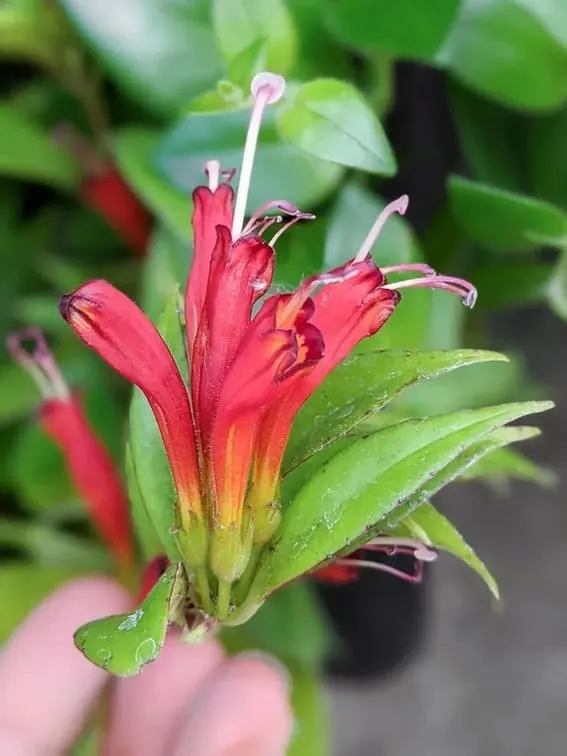
This tropical plant is a great indoor plant for pets, with glossy leaves and red, tubular flowers that resemble lipstick.
The Lipstick Plant is great for pets because it is a non-toxic plant that is safe for cats, dogs, and other household pets to be around, and if ingested, it shouldn’t be a concern.
Moreover, this plant has a long vine that can be trained to climb or trail, adding interest and texture to any room.
Care Instructions For Lipstick Plant (Aeschynanthus Radicans) Plant:
1. Water: The Lipstick Plant prefers evenly moist soil but is not soggy or waterlogged. Water the soil until it is evenly moist, then allow the top layer of soil to dry out slightly before watering again.
2. Light: Place the Lipstick Plant in bright, indirect light. Avoid direct sunlight, as this can cause the leaves to scorch.
3. Humidity: Keep the humidity around the Lipstick Plant at moderate levels. If the air in your home is dry, consider using a humidifier or misting the plant leaves with a water spray bottle.
9. Staghorn Fern (Platycerium Bifurcatum).
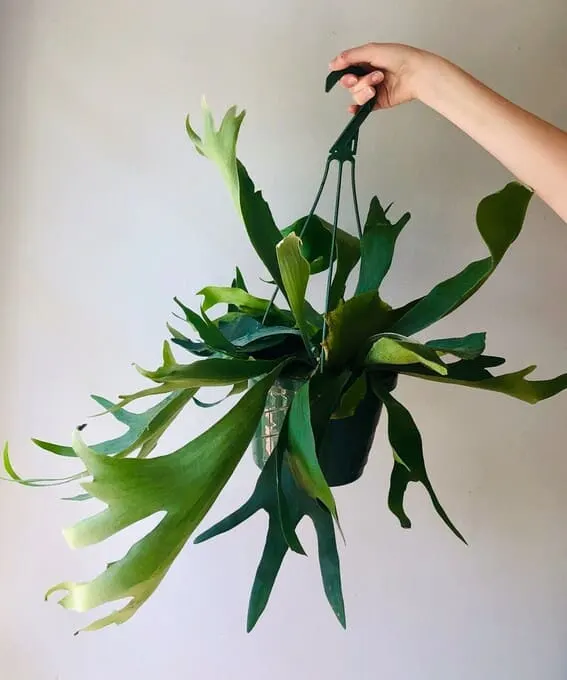
This is another excellent indoor plant that is great for pets and purifying the home as it’s a fern that grows on a mount or in a hanging basket, with unique antler-like fronds.
The Staghorn Fern is a unique and beautiful choice for pet owners and a great addition to any home as an attractive, low-maintenance houseplant.
It is straightforward to care for and is non-toxic, making it safe for pets and children.
Care Instructions For Staghorn Fern (Platycerium Bifurcatum) Plant:
1. Provide bright indirect light: Staghorn ferns prefer bright indirect light but can also tolerate some direct sunlight. Be careful not to place them in direct sunlight for too long, which can cause the fronds to burn.
2. Water regularly: Staghorn ferns prefer to be kept evenly moist but not overly wet. Water your fern when the soil feels dry to the touch.
3. Use well-draining soil: Staghorn ferns prefer light and well-draining soil. A good mix for these plants includes equal parts of potting soil, peat moss, and either perlite or sand.
10. Swiss Cheese Plant (Monstera Adansonii).
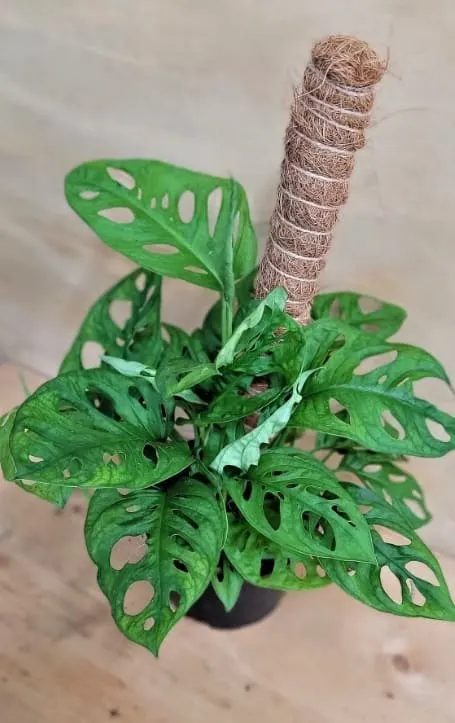
A climbing plant with distinctive Swiss cheese-like holes in its leaves, the Swiss Cheese Plant (Monstera adansonii) is a great indoor plant for the air because it is a fast-growing, low-maintenance plant with large leaves that filter pollutants from the air.
It is also pet-safe and can help keep your home’s air clean and fresh.
Care Instructions For Swiss Cheese Plant (Monstera Adansonii) Plant:
1. Water: The Swiss Cheese Plant should be watered regularly, but allow the soil to dry out between waterings. Water the soil directly, avoiding the leaves, as standing water can cause rot or mold.
2. Sunlight: This plant prefers bright, indirect sunlight. Avoid direct sunlight, as it can scorch the leaves.
3. Pruning: Prune the plant to control its size and shape. Clip off any dead or diseased leaves.
4. Repotting: Repot the Swiss Cheese Plant every two to three years, using a well-draining potting mix.
5. Pests: Check the plant regularly for pests, such as mealybugs or spider mites. If found, treat with insecticidal soap.
11. Spider Plant (Chlorophytum Comosum).
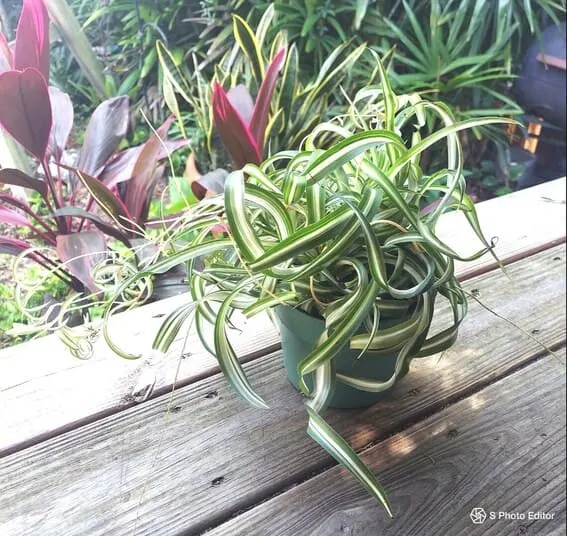
The spider plant is another safe indoor plant for pets that can also help purify the air by removing formaldehyde and xylene.
Although spider plants are not uncommon, they are beautiful and extremely easy to care for as indoor air-purifying houseplants.
Care Instructions For Spider Plant (Chlorophytum Comosum) Plant:
1. Place the Spider plant in a spot that gets medium to bright light.
2. Water the plant when the soil is dry to the touch.
3. Fertilize once a month during the growing season.
4. Trim off any brown or yellowing leaves to maintain a tidy appearance as it grows quite quickly.
12. Boston Fern (Nephrolepis Exaltata).
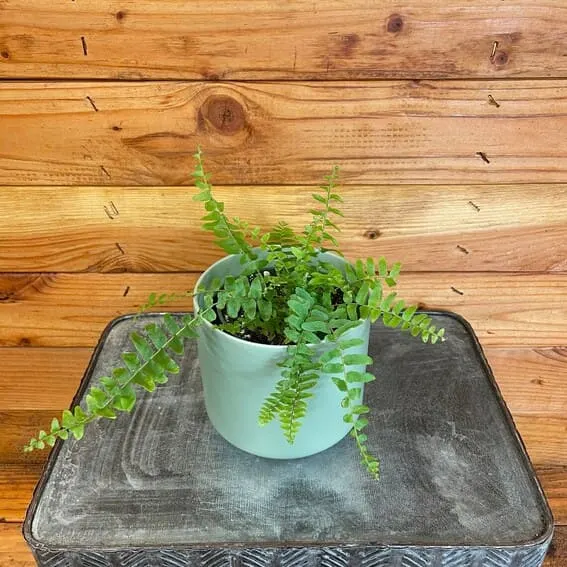
The Boston fern (Nephrolepis exaltata) is a great pet plant because it is non-toxic and safe for animals.
The plant is also effective at removing airborne toxins and helping remove air pollutants like formaldehyde and xylene.
Making it an excellent choice for pet owners looking to purify their home’s air.