If you’re looking for a houseplant to put in a sunny spot in your home, then you’re in luck, as there are plenty of suitable houseplants for direct sunlight. Whether you’re after stunning flowers or striking foliage, this article will guide you through the options.
Choosing indoor plants that suit the lighting in your home is an important first step to helping your plants thrive. These houseplants for direct sunlight won’t just survive the sunshine but will thrive and look their best.
Houseplants For Direct Sunlight
Croton (Codiaeum variegatum)
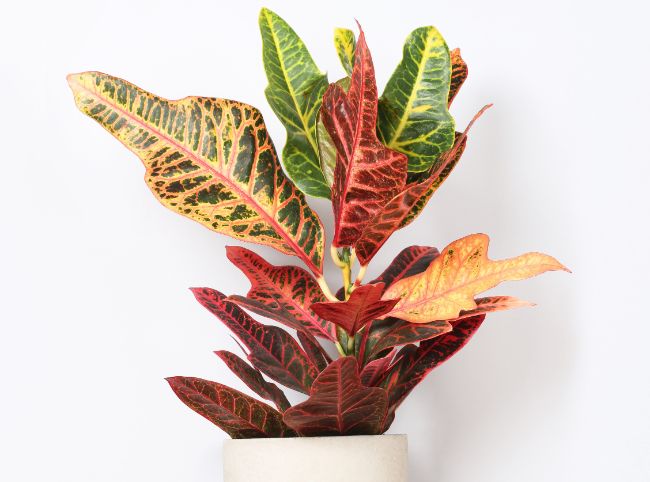
If you’re looking for a boldly colored houseplant with an exotic look, a Croton is perfect for your space. The thick leathery leaves of this tropical plant are vividly marked with yellow, pink, purple, orange, and scarlet; as they age, they may deepen to black depending on the variety. Seeds on a Croton plant resemble ticks, giving rise to its name – “Croton” comes from a Greek word for tick.
Give your plant as much bright light as possible to keep its leaves bold and vibrant. Too little light results in dull foliage colors, leaf drop, and leggy plants. Accent the gorgeous leaf colors by planting your Croton plant in a brightly colored pot. Be cautious of the plant’s sap – it may stain and cause skin irritation.
Basil (Ocimum basilicum)
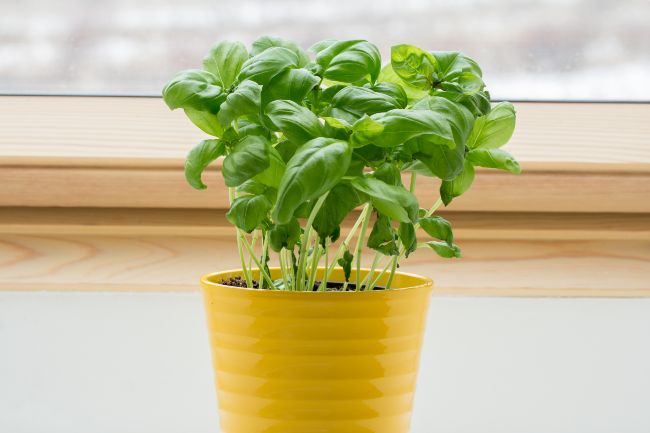
Basil makes a great addition to your indoor garden. Its strong clove-like flavor plays a leading role in Italian cooking, frequently pairing with tomatoes – think marinara, Caprese salad, or bruschetta – and used in many pasta dishes. Growing a pot of your own provides a fresh supply in your kitchen year-round.
To grow Basil as an indoor plant, mimic the conditions of summertime; choose a warm location (between 72-85 °F/22-29℃) that gets at least six hours of direct sunlight daily, and in the winter keep plants away from drafty windows and doors that are frequently opened. Basil is easily propagated too, so you can grow a never-ending supply of basil with ease.
Ponytail Palm (Beaucarnea recurvata)
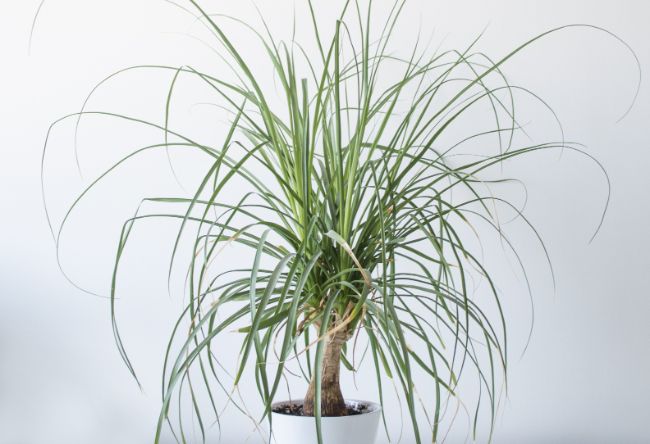
Despite its name, the Ponytail palm isn’t closely related to true palms but rather a member of the agave family, native to the southeastern Mexico desert. A stocky bulb-like shaped trunk stores water, allowing the plant to go weeks without needing to be watered and is the basis for the plant’s nicknames such as a bottle palm or elephant foot tree. Watering too frequently actually causes the leaves to turn yellow and drop.
Ponytail palms make wonderful houseplants for direct sunlight and are tolerant of a fair amount of neglect and variable indoor conditions. Ponytail Palms are slow-growing plants, but they can reach three or four feet tall indoors. When growing outside in higher light conditions, they can reach an astounding 15 to 20-feet (four to 6 meters) tall! Read my guide to caring for Ponytail Palms here.
Gardenia (Gardenia jasminoides)
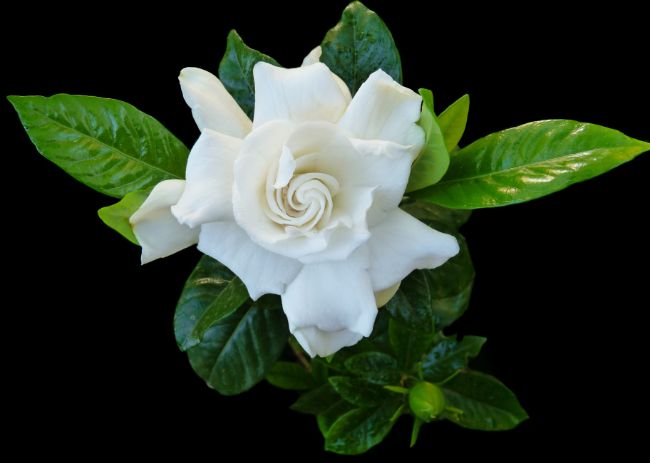
While many people grow gardenias as shrubs outdoors, with some basic care, they make wonderful houseplants for direct sunlight. Their gorgeous blooms and intoxicating scent can bring a touch of luxury to your home. They are more finicky than the other plants on this list, requiring a little extra care and attention, but are well worth it. See my article on Gardenia care to learn more.
Gardenias, like other flowering plants, prefer a minimum of 4 hours direct sunlight per day. Keep the growing media moist but not soggy when the plant is actively growing. During the winter months, allow the top one half to one-inch of potting soil dry out before watering.
They also love high humidity levels, so the bathroom is an excellent spot for them if it has direct sunlight. Gardenia plants handle average indoor temperatures during the day, but like it cooler at night.
China Doll Plant (Radermachera sinica)
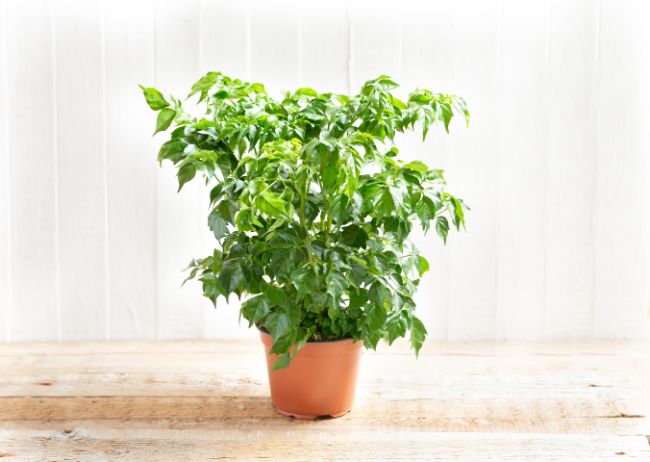
A newcomer to the houseplant scene, China Doll plants were adapted from their origin as large trees native to southern China and Taiwan to houseplant species in the 1980s. When grown as houseplants, they reach four to six feet tall at maturity and are adorned with glossy, lace-like leaves, giving them a look of elegance.
China Doll plants tolerate low humidity levels found inside most homes but will do best with higher humidity. Your China Doll Plant can thrive in direct sunlight, as long as not moved suddenly from a darker location. It will do best in a location providing lots of bright, indirect sunlight, so consider providing a little shade for this one.
If your China Doll plant is not getting enough light, it can become lanky and look stretched. Try not to fiddle with a China Doll plant, including moving it regularly or re-potting it yearly. They like to be left alone and prefer being slightly rootbound. Read more about China Doll plant care in this article.
Jasmine (Jasminum spp.)

Without a doubt, Jasmine plants are known around the world for their intoxicating, heady scent, and they grace the gardens and landscapes of many homes and businesses. While usually grown as a vine outdoors, certain climbing varieties are well-suited for growing indoors in containers.
When growing indoors, plant Jasmine in a potting mix that drains well and set containers in a south-facing window where they receive plenty of sun throughout the day.
Give them a trellis or other support structure they can climb, and keep the potting soil evenly moist without being soggy. Jasmine will do best if temperatures are on the cool side, staying between 60 and 75℉ (15 to 24℃), blooming in late spring to early summer with clusters of white flowers. Learn more about growing Jasmine indoors here.
Sago palm (Cycas revoluta)
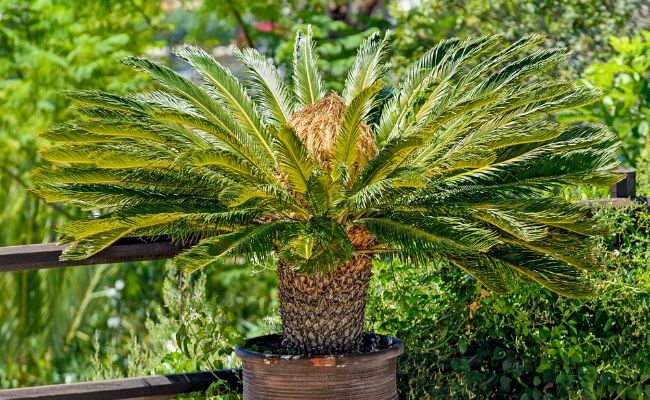
If you’re looking for a straightforward plant to grow that comes with a great history lesson, then the Sago palm is an excellent choice for you. These prehistoric plants date back to before the time of dinosaurs. They are often known as “living fossils” because they’ve changed very little over time. Another interesting fact about the Sago Palm – it’s not a palm at all but is a type of plant known as a cycad related to the cone-bearing conifers.
Sago palms make great houseplants for direct sunlight, and add a touch of the tropics to your home with their unique look. Dark-green, feathery looking fronds spring out of a swollen stem that bears the resemblance of a scaly bulb. These trees do best in bright light and can withstand hours of direct sun on their foliage, even in the hottest of climates.
Be careful not to overwater your Sago palm since it prefers dry feet and fertilize monthly. If you have small children or pets it’s best to keep your sago palm out of reach as it’s known to be poisonous.
Ti Plant (Cordyline minalis)
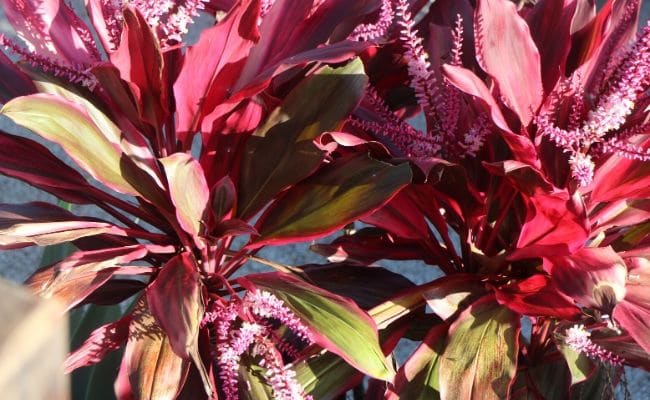
Also known as the good luck plant, the Ti plant holds immense cultural importance in animistic religions in the Pacific Islands, New Zealand, Island Southeast Asia, and Papua New Guinea. It was brought to Hawaii by early Polynesian settlers and is commonly planted outside of homes to bring good fortune and ward off evil spirits or ghosts.
Ti plants have eye-catching evergreen foliage that comes in a wide variety of colors and variegations, including green, red, orange, pink, and chocolate. Plants grow in a tiered rosette reaching upwards of one-meter tall when fully mature. They are perfect houseplants for direct sunlight, as the foliage will be at its most colorful and vibrant when grown in full sun.
Barrel Cactus (Echinocactus grusonii)
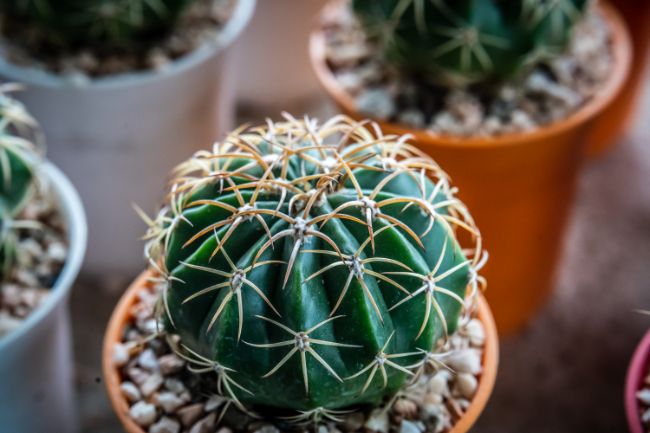
One of the most common cacti species, the Barrel cactus is known for its cylindrical shape that resembles a large sewing pincushion. The genus Echinocactus has a crown of finer spines than the genus Ferocactus making them more suited for life as a houseplant.
Blooms burst forth in a neon brilliance throughout the summer months that are impossible to ignore, and a sight to behold. Barrel cacti are easy to care for and make a great choice for the beginner gardener with lots of sunlight in their home.
Barrel cacti need full sunlight through the spring and early summer months to trigger blooming. If plants do not receive adequate sunlight, they produce a ring of blossoms that resembles a cross around the top of the “barrel” that never opens.
Moon Cactus (Gymnocalycium mihanovichii)
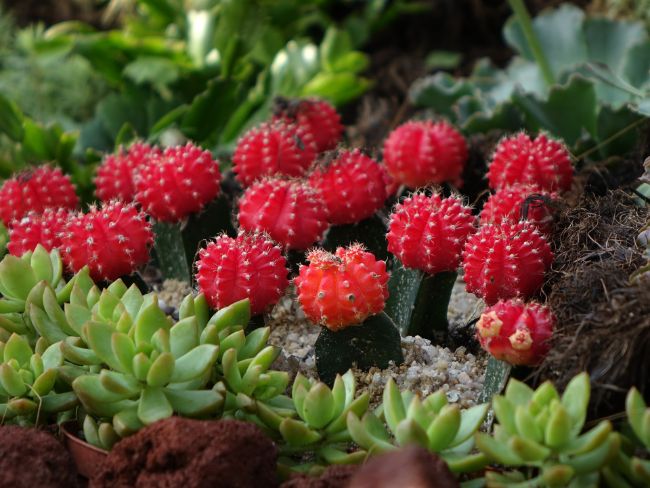
Take a stroll through any home and garden center, and the infamous moon cactus will surely catch your eye. Their unmistakable round balls of pink, yellow, or orange usually set atop a spike of green cactus. The funny thing though? These are actually two different species of cacti that are grafted together to create one unique plant.
The top part of the Moon cactus, the colorful graft comes from genus Gymnocalycium, with the rootstock cacti coming from another cactus species. The colorful Gymnocalycium is a mutant, which is unable to photosynthesize and produce its own food, so it requires nutrients from the cacti base it is grafted onto.
Although suitable for direct sunlight in most situations, you should provide more indirect light in summer or in hot climates. Allow the potting mix to dry out before watering. Moon cacti do not like soggy soil and are quickly prone to root rot if overwatered.
Nivosa Cactus (Parodia nivosa)
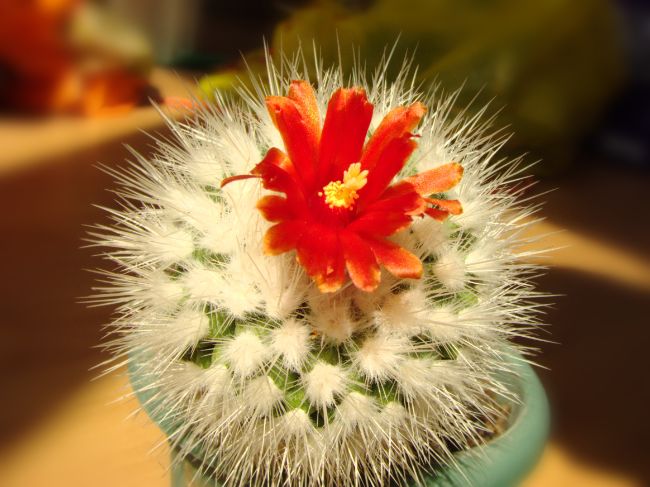
When found in its natural habitat, the Nivosa, or powder puff, cactus is a spherical, dull-green cactus that grows a solitary stem and blooms in the spring with funnel-shaped, bright red flowers. Dense white spines serve as protection against animals looking for water in the desert environment.
To grow Nivosa cacti indoors, place them in a bright light location, such as a southern exposure window, while protecting them from drafts. Avoid overwatering. Water when the top of the potting mix is drying, thoroughly wetting the root ball.
Aloe Vera (Aloe barbadensis)
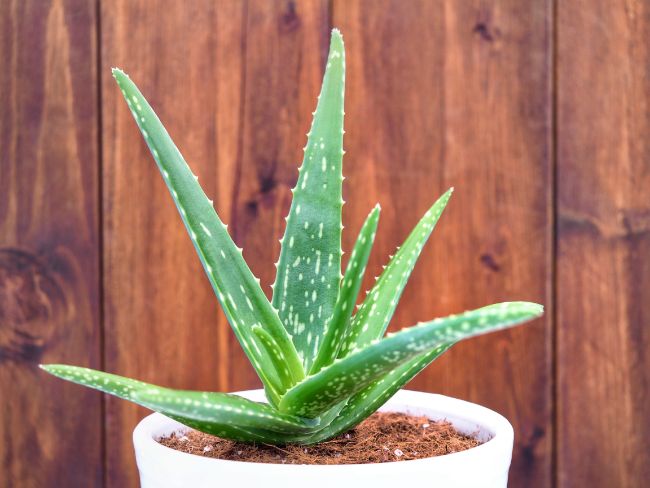
Highly prized for their ability to soothe burns and other skin irritations, Aloe Vera plants are one of the most commonly indoor-grown succulents worldwide. The Aloe plant is even known in some circles as the first-aid plant, burn plant, or a miracle plant. Many people grow them in the kitchen to use if they burn themselves cooking.
Pot your Aloe Vera plant in a terracotta container with a well-draining potting soil mix. Terracotta pots allow for better airflow through the container walls helping to dry out the root zone quicker. Their extra weight also keeps the plant from tipping over.
Only water your Aloe plant when the potting soil is almost completely dried out. This may mean every couple of weeks during the warmer summer months, and as long as every month or every other month during the winter when the plant is dormant.
Burro’s Tail (Sedum morganianum)
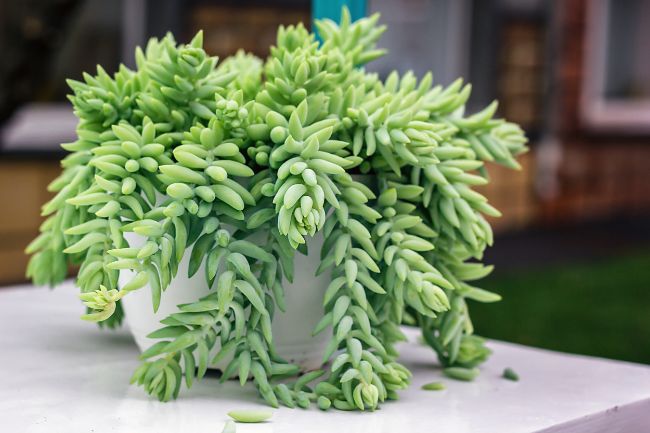
The Burro’s Tail is known to be a bit tricky to grow indoors, but if you’re confident in your abilities to care for finicky succulents, this plant is well worth the time and effort. Plants provide interesting texture with trailing stems of fleshy leaves that almost look braided when swollen with water.
Put it in a sunny location and check on it every couple of weeks, watering when necessary. Too much attention and any jostling of the plant can cause the rice-shaped leaves to fall off.
Burro’s Tail plants take on average six years to mature and the trailing stems reach a hearty four feet long when fully grown. The stems grow very thick with overlapping leaves, causing them to become quite heavy. Make sure you grow it in a sturdy pot that can withstand the weight.
Coral Cactus (Euphorbia Lactea Cristata)
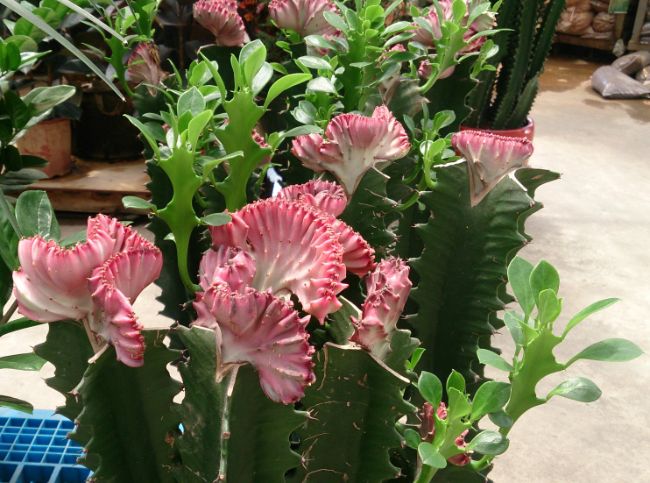
Another Frankenstein-type plant, the Coral cactus is a mashup of two different types of euphorbias. The base is a thick, upright green succulent stem, and the top looks like a coral reef with crinkled leaves looking like cabbage leaves. Depending on the variety used for the crest, the top comes in white, red, green, yellow, or purple ruffled growth.
The coral cactus is easy to grow and needs little care besides providing full sun exposure and watering when the potting soil dries out. Unlike true cacti, the coral cactus likes humid environments and benefits from measures to increase humidity in your home.
Crown Of Thorns Plant (Euphorbia milii)
Also known as the Christ Plant or Corona de Cristo in Latin America, the Crown of Thorns plant gets its name from the sharp, inch-long black spines that adorn the stems, thought to be used for the crown of thorns worn by Jesus Christ at the time of the crucifixion.
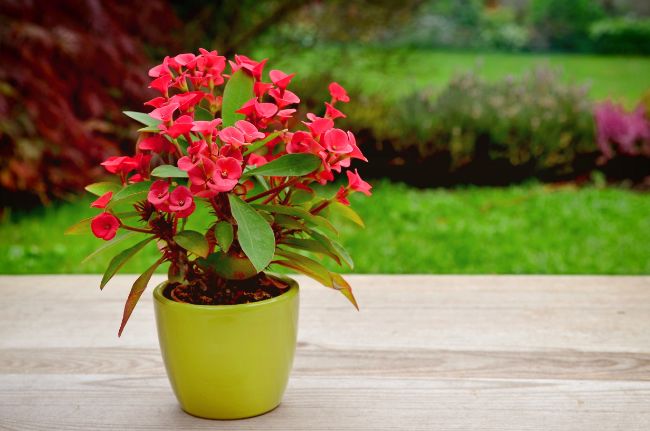
This sprawling evergreen has leathery, obovate green leaves and tiny, inconspicuous yellow flowers surrounded by showy, long-lasting, red bracts. Indoor plants will bloom from late winter all the way through the fall when conditions are right. They make great houseplants for direct sunlight as they will bloom even more profusely when given plenty of light.
Like other succulents, wait to water your plants until the top inch of the potting soil is dry and then water thoroughly. Crown of Thorns plants need three to four hours of direct light every day and prefer temperatures between 65 and 75℉ (18 to 24℃). Read my guide to Crown of Thorns Plant care to learn more.
Desert Rose (Adenium obesum)
Unlike many other succulents, the desert rose doesn’t have spines or spikes to protect itself in a hostile desert environment, or thick fleshy leaves to store water. Many people don’t even realize the desert rose is a succulent because it lacks some of the tell-tale features. Instead, it stores water in its thick, swollen trunk.
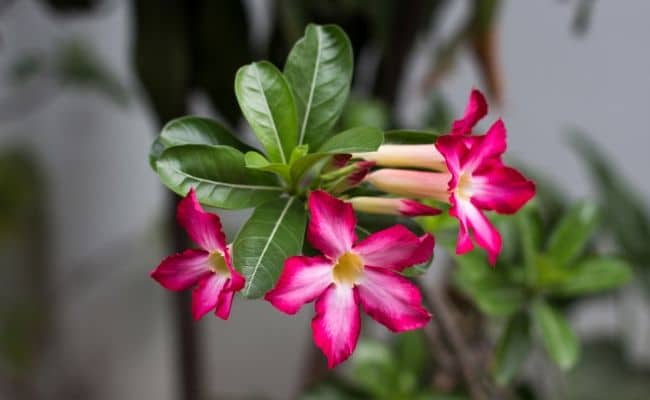
Similar in shape to a bonsai tree, the desert rose develops a tidy canopy perched atop the graduate stem when fully mature. Trumpet-shaped flowers appear in shades of white, pink, purple, and red. Desert roses are perfect houseplants for direct sunlight, and prefer really bright, warm locations in your home away from drafts. Water only when the soil dries out and pinch off the stem tips to encourage fuller, bushy growth.
Echeveria (Echeveria spp.)
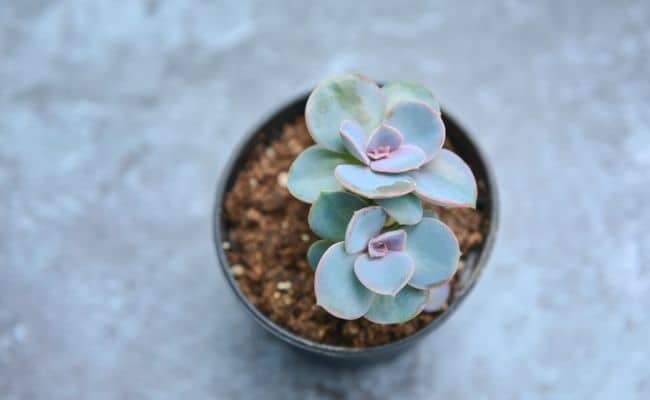
The stunning rosette shape and a large variety of colors make Echeveria plants one of the most popular succulents since they closely resemble flowers, making them easy to incorporate into home decor. Available in a gorgeous pastel color palette, echeveria varieties grow a couple of inches tall to no larger than 12 inches (30 cm.) at full maturity.
Like other succulents, these plants are easy to care for and can be propagated easily, multiplying your collection with ease. Place them in bright, direct sunlight, keep them away from high humidity, and water thoroughly only when the soil has dried out.
Hens and Chicks (Sempervivum tectorum)
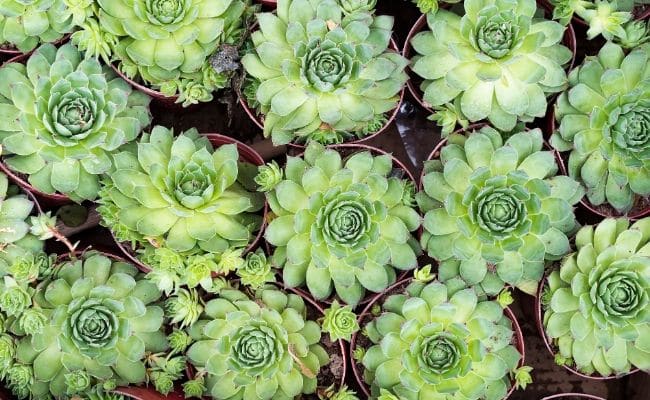
Native to mountainous and stony areas of Europe, hens and chicks plants were grown originally on thatched roofs to prevent lightning fires during thunderstorms and as an edible winter vegetable. Now, these drought-tolerant succulents are staples in rock gardens and indoor container arrangements.
The plant gets its name from the numerous babies (or “chicks”) that spring up via underground runners from the mother plant (or “hen”) to ultimately form dense mats of plants.
The low-growing perennial will never grow more than four inches (10 cm) or so in height but has an impressive spread of two feet (60 cm) or more in width. Foliage comes in red, green, blue, gold, copper, or some mixture of those colors. “Chicks” can be removed from the mother plant and transplanted to easily propagate new plants.
Jade Plant (Crassula ovata)
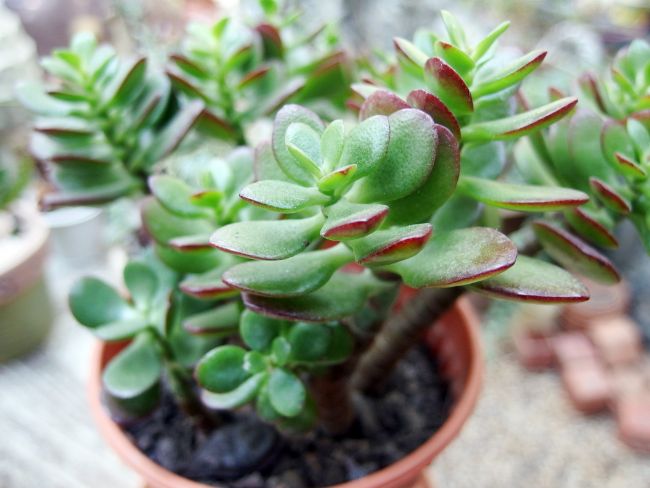
Jade plants are commonly grown as houseplants because they are easy plants to grow, but also because they are seen in Asian culture as an emblem of good luck or prosperity. One of my favorite succulents, Jade plants are so versatile in how they can be grown indoors, ranging from tiny teacup plants, to large indoor trees.
One of the challenges with growing Jade plants indoors is keeping them from getting leggy or stretched out between the leaves, which makes them great houseplants for direct sunlight. Give them a spot to live where they receive at least six hours of sunlight every day. Read my guide to Jade plant care to learn more.
Snake Plant (Sansevieria trifasciata)
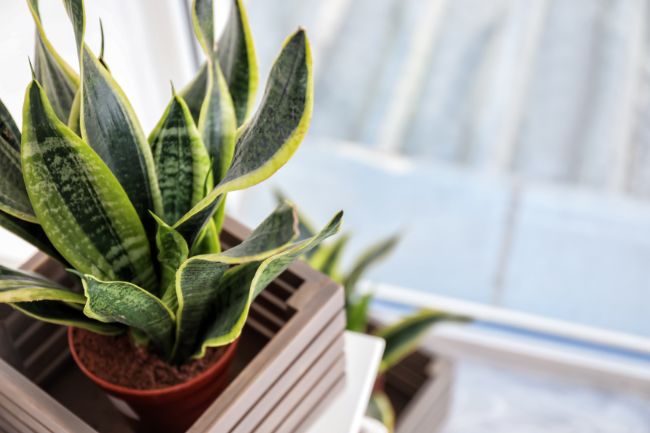
Another very common houseplant, the Snake plant, or mother-in-law’s tongue has a striking appearance and low care needs. Snake plants are suitable for a range of lighting conditions, tolerating low light fairly well, but doing best in bright light or direct sunlight.
The snake plant’s swordlike leaves can grow to 3-4 feet in height or more, coming in a variety of shapes: short and wide, narrow and long, and even cylindrical to give the plant a spike-like appearance. Leaves come in a wide range of colors from white to yellow, green-striped, and green leaves cross-banded with distinct golden edges.
Snake plants are easy to care for, withstanding periods of drought, growing in bright sunshine or shade, and rarely needing to be repotting. Be cautious to not overwater a snake plant as it is very susceptible to root rot.
Aeonium (Aeonium arboreum)
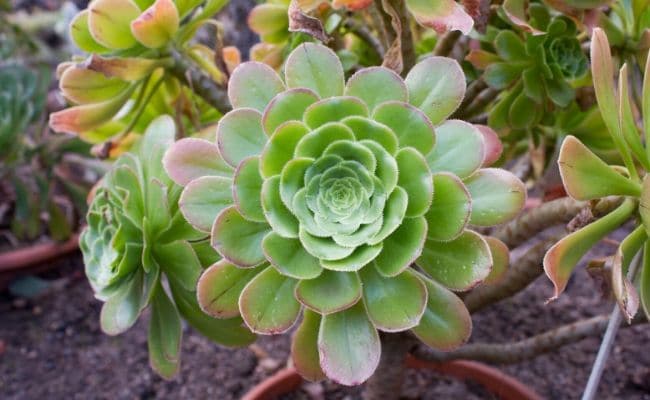
Unlike many other succulents in this article, Aeonium arboreum grows vertically to an astounding three feet, developing fleshy rosettes atop its woody stems. Once mature, the plant may produce a pyramidal panicle adorned with small yellow blooms growing above the leaf rosettes that are green to dark purple in color.
Aeonium plants prefer temperatures average 70 to 85℉ (21 – 30℃) and do not like water to set around their roots. Let the container soil dry out before watering plants thoroughly. Plant in a clay pot, if possible; better air movement through the walls of the clay container helps the potting mix to dry out quicker.
Zebra Haworthia (Haworthiopsis fasciata)
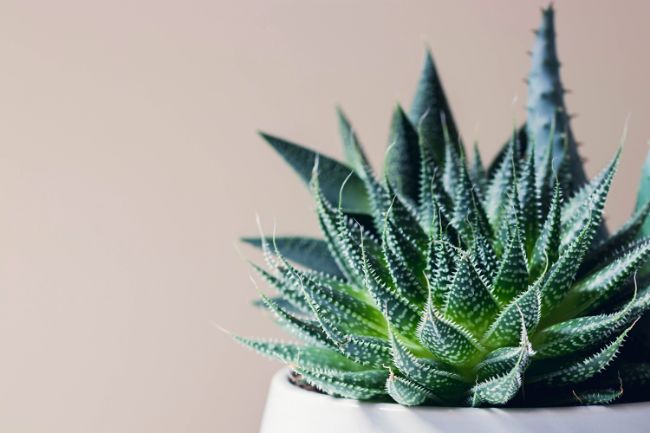
Easy to grow…hard to kill! Yes, that about sums up the Zebra Haworthia plant, which some of you may know as the Zebra cactus (while it isn’t a cactus at all). The Zebra Haworthia plant is very similar in style to the Aloe Vera with thick, dark green leaves but also has the characteristic white stripes of wart-like tubules on the outsides of the leaves.
The Zebra Haworthia only grows to about 5 inches in height, and rosettes may span 8 inches across. Plants are easy to propagate when offsets pop up around the base of the plant. Just pull them up, allow them to harden off (i.e., dry) for a couple of days, and then plant in a new container. Like the other succulents, let the soil dry out before watering, avoid cold drafts, and make sure your plant gets plenty of sunlight.
Avocado (Persea americana)
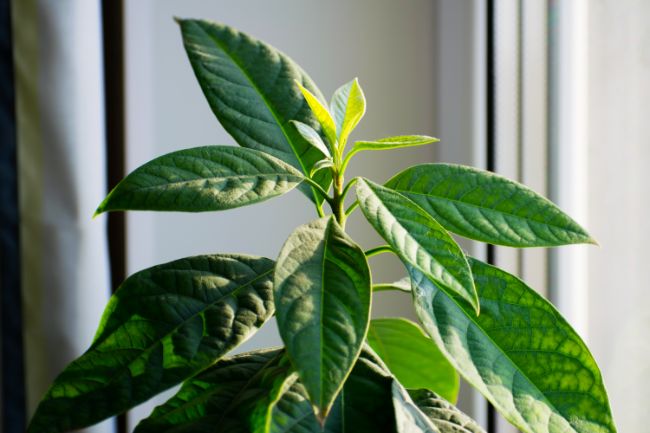
From the newly infamous avocado toast to the well-known guacamole, avocados have seen a boom in popularity over the last years. Most of us aren’t fortunate enough to live in a temperate climate conducive to growing a tree in our backyard. However, Avocado trees make excellent houseplants for direct sunlight, as long as you have the space for them as they grow.
Avocado trees can be started from a pit that would usually be destined for the trash, or you can buy nursery stock.
If you’re looking for a tree to produce fruit, go with the nursery stock since it will mature faster; if you are okay with a beautiful foliage plant, have fun sprouting your own seed. Keep your plant in a sunny location and the potting soil moist but not soggy, and maybe in a handful of years, you’ll be rewarded with avocados!
Lime (Citrus × aurantiifolia)
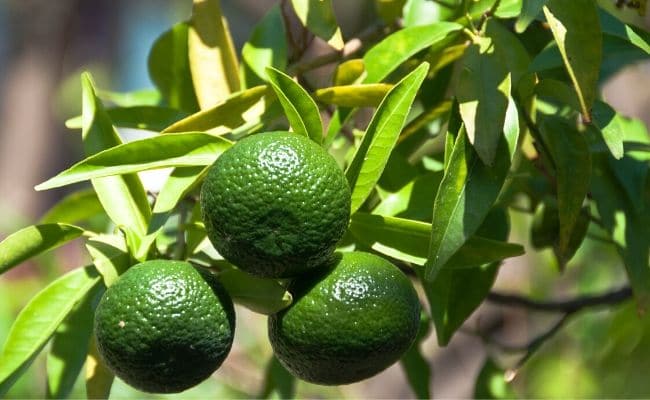
A potted lime tree grown indoors provides you with fresh, home-grown limes but also fills your home with the heavenly aroma of citrus blossoms when in bloom. Dwarf trees only grow about three feet tall, yet they produce normal, full-sized fruit once they are mature enough.
Like all other citrus trees, a lime tree is a heavy feeder that requires regular fertilization, especially when grown in a container. Opt for a citrus specific fertilizer that has a higher level of nitrogen than phosphorus or potassium for improved foliage growth. Lime trees are grafted onto the rootstock, so make sure to remove any suckers that sprout from below the graft union.
Kumquat (Fortunella japonica)
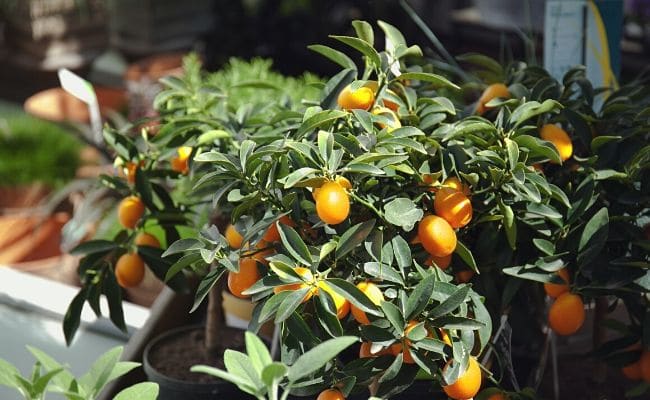
Kumquats are one of the most cold-hardy citrus plants, so they can be grown in a wider range of growing zones than other plants, but for those without a garden, they make fantastic container plants! The strange little fruits are like oranges but smaller and sourer. With edible skin, these tangy bite-sized snacks can be popped right into your mouth after picking.
Mature trees grow to about five feet tall in containers and won’t fruit for the first few years of their lives. Water kumquat trees regularly but allow the top one to two inches of soil to dry out before giving your plant a drink. When trees are small, pinch off the uppermost growing point to force it to branch out.
Meyer Lemon (Citrus x meyeri)
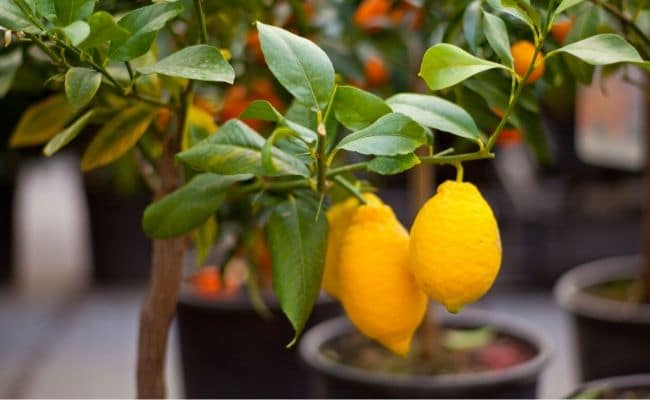
Prized for their flavor, Meyer lemons are a cross between a mandarin orange and a lemon. They are one of the easiest citrus trees to grow indoors in a container. The trees are prolific fruit producers, and a bonus is an intoxicating smell given off by beautiful blossoms.
Meyer lemon trees are naturally shrub-like but can be pruned into tree form to grow in containers. Trees will flower and fruit twice a year (once they mature) if they receive eight to twelve hours of sunlight, and are fertilized regularly with a citrus-specific plant food according to the label directions.
Tangerine (Citrus x reticulata)
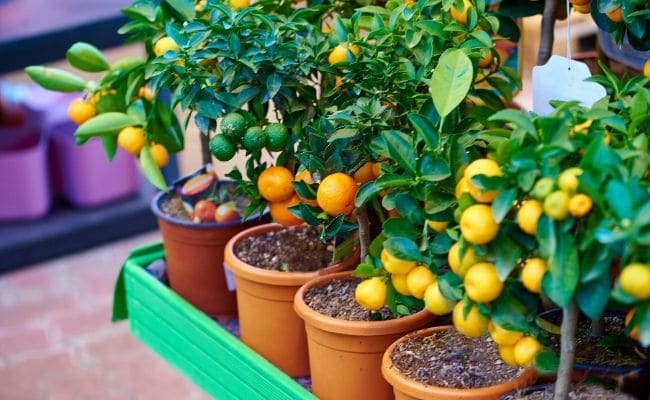
Tangerines are a small, yellowish-orange sweet fruit, resulting from a hybrid cross between a mandarin and an orange. If you want to try your hand at growing your own indoors, opt for a dwarf variety to keep the size manageable. In three or four years, you’ll be rewarded with deliciously sweet fruit that peels easy, making for a tasty, quick treat.
Plants require hand pollination when grown indoors, but don’t let this worry you. When blossoms are open, carefully transfer pollen from one flower to another using a small, dry paintbrush. Keep your tangerine tree in a sunny location where it can get eight to twelve hours of sunlight and give the container a quarter turn every two weeks to expose all sides to sunlight.