It’s easy to understand why so many professionals are opposed to retiring it.
Here is the key takeaway: The Air Force started the Attack-Experimental program, or A-X, in September 1966 to create a new kind of close-air-support aircraft. The revised plan called for a 30-millimeter rotary autocannon that could fire 4,000 rounds per minute.
General Electric’s 30-millimeter GAU-8 Avenger cannon has been the primary weapon of the U.S. Air Force’s A-10 Thunderbolt II ground-attack plane for more than 40 years. It also arms the Goalkeeper naval close-in weapon system.

It’s a huge and awesome gun.
The GAU-8 has seven independent barrels with rotary-locking bolts that are mechanically actuated. The weapon is powered by a pair of hydraulic motors and can, in theory, spew up to 4,200 tank-smashing, depleted-uranium rounds per minute.
In the 1960s, the Air Force decided it needed a dedicated and affordable ground-attack aircraft capable of destroying armored vehicles and static positions in close support of friendly ground troops.
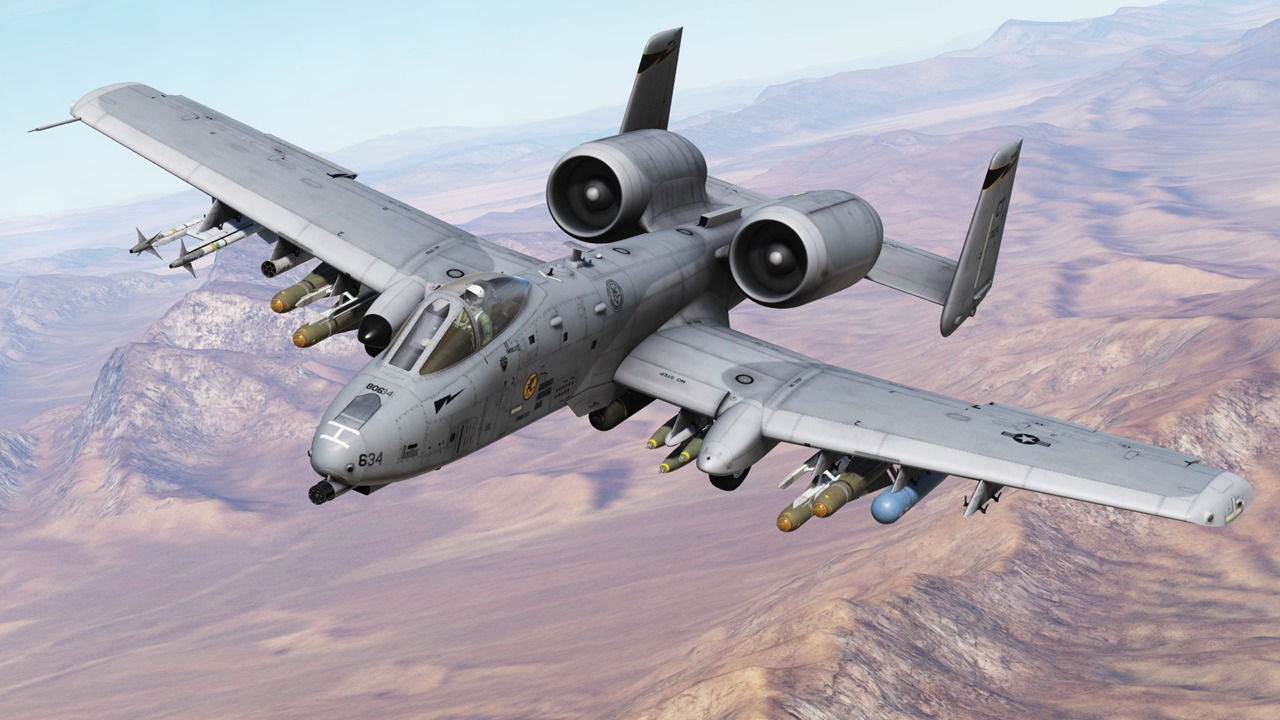
The threat of a massive Soviet armored push into Western Europe necessitated an aircraft and weapon system that could engage and destroy main battle tanks and armored personnel carriers.
In September 1966, the Air Force launched the Attack-Experimental program. or A-X, to develop the new close-air-support plane.

The A-X program called for an inexpensive aircraft with good low-speed maneuverability, long loiter time and an emphasis on survivability and firepower. The developers consulted A-1 Skyraider pilots with operational experience in Vietnam and revised their proposal in the summer of 1970.

The new proposal specified a 30-millimeter rotary autocannon with a rate-of-fire of 4,000 rounds per minute. The Air Force selected two competing gun designs from General Electric, which had developed the earlier M61 Vulcan, and Philco-Ford, developer of the unsuccessful 25-millimeter GAU-7.General Electric’s design won out. The Air Force designated it GAU-8 or, more technically, the “A/A49E-6 Gun System.”
General Electric didn’t simply scale up its 20-millimeter M61 Vulcan system, as that would have resulted in a gun that far exceeded the Air Force’s maximum weight requirement. Instead, the company developed a new, lighter system that it coupled with the Vulcan’s linkless ammunition feed.

The Air Force down-selected two possible aircraft designs to carry the new gun — Fairchild Republic’s YA-10 and the YA-9 from Northrop. Both designs took the GAU-8 as their starting points. Fairchild mounted the YA-10’s cannon slightly to port, with the firing barrel indexing on the starboard side at the nine o’clock position.
This placed the GAU-8’s 45 kilonewtons of recoil force along the plane’s centerline and prevented the A-10 from being pushed off target when it fired. Recoil adapters mitigated the amount of recoil that transferred to the plane’s airframe.

Trials began in late 1972 and, in January 1973, the Air Force selected the YA-10. The A-10 is a sturdy, durable aircraft that requires relatively little maintenance and can even operate from forward bases that often lack extensive support systems and fully-prepared runways.
Fairchild designed the aircraft for high survivability with an airframe that can withstand 23-millimeter cannon fire and an armored cockpit rated to resist 57-millimeter rounds. The A-10’s fuel tanks are self-sealing and the aircraft can be flown in a so-called “manual reversion mode” if its hydraulics or avionics are damaged.
The GAU-8 cannon itself weighs 620 pounds, while entire the A/A49E-6 Gun System weighs 4,029 pounds, totaling approximately 16 percent of the A-10’s overall weight. The GAU-8 has seven barrels and was, upon its introduction, capable of firing up to 4,200 rounds per minute, but the Air Force downgraded it to a still-impressive 3,900 rounds per minute.

At this rate, each of the seven barrels fires 557 rounds per minute.
In practice, pilots fire in one-to-two-second bursts in order to conserve ammunition and extend barrel life. The Air Force rates the barrels as having a minimum life of 20,000 rounds. Each barrel features a quick-release mechanism for ease of maintenance or replacement.
The system’s overall length is 18 feet and its ammunition drum is three feet in diameter. The GAU-8’s magazine can hold up to 1,174 rounds, but the Air Force usually loads only 1,150. Two independent hydraulic motors, which together produce 77 horsepower, power the ammunition drum feed and the gun itself.

These motors spool up the rotation of the GAU-8’s seven barrels almost instantly.
The A/A49E-6 Gun System doesn’t eject spent casings from the aircraft, instead they cycle back into the drum magazine and, later, the ground crew unloads them. This eliminates the danger of spent cases being sucked into engine intakes or damaging the airframe.
Early on, ground crews replenished the A-10’s magazine manually. Reloads could take hours. However, in 1976 the Air Force requested proposals for an automatic loading system. The Coloney Engineering Company won this contract with a design that could remove spent cases while simultaneously loading new ammunition.

General Electric developed the GAU-8’s 30-millimeter shells concurrently with the basic gun design. In order to punch through the armor of a main battle tank, the ammunition needed a hard metal penetrator. The optimal material for this was tungsten, but the majority of the world’s tungsten supply was in China and the Soviet Union.
As a result an alternative was found — depleted uranium, a by-product of the enrichment of uranium for nuclear power reactors. It boasts approximately 60 percent of the radioactivity of naturally-occurring uranium. As an added benefit, fragments burst into flames when they break off from the main projectile. General Electric’s promotional material is careful to generically describe the depleted uranium as a “heavy metal.”
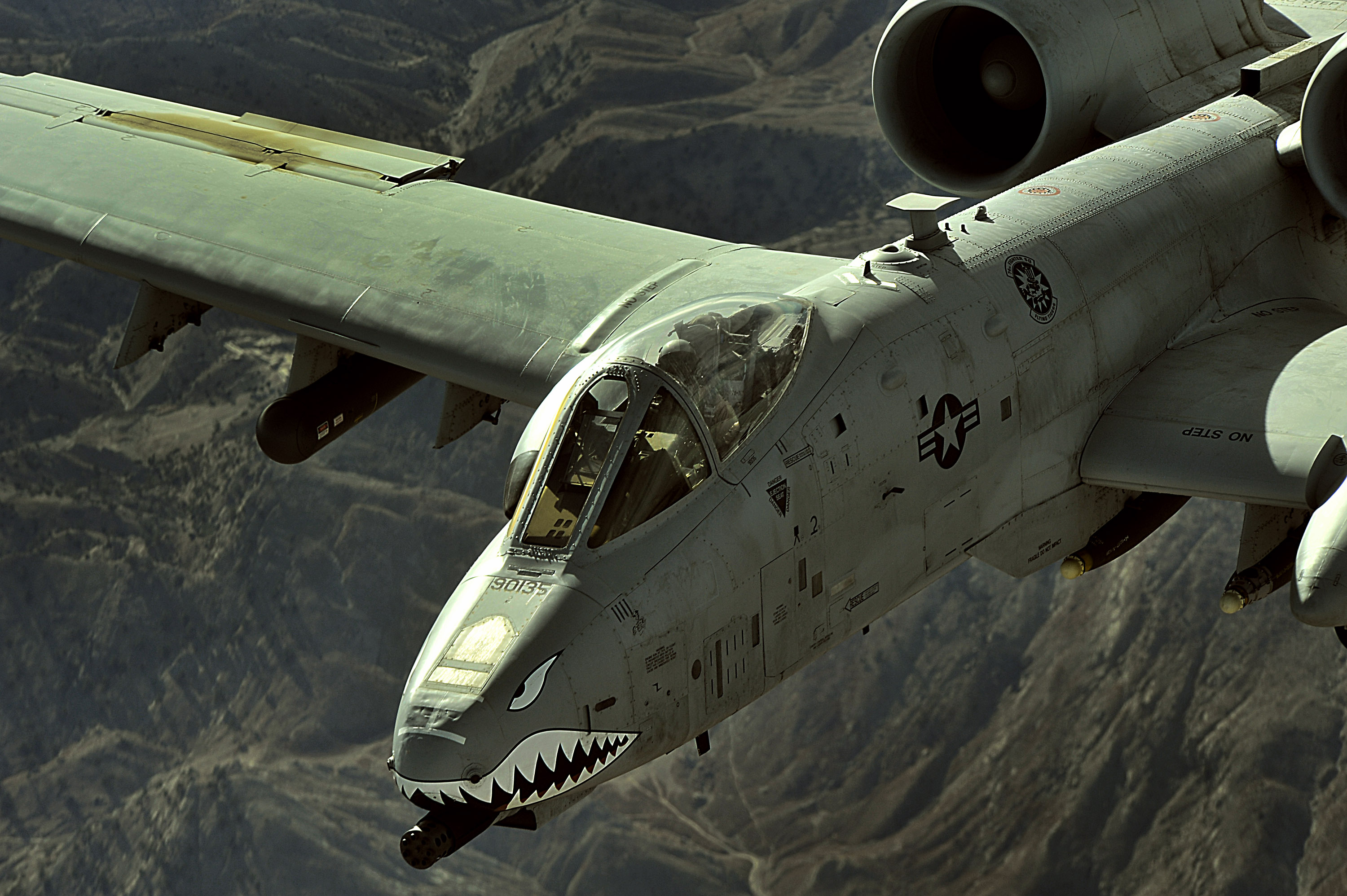
General Electric developed two types of ammunition based on Oerlikon’s 30-by-173-millimeter 304 RK round. An armor-piercing incendiary round designated PGU-14/B. And the PGU-13/B, a high-explosive incendiary. A-10s carry five PGU-14/B rounds for every one PGU-13/B round. Both shells feature aluminum alloy cases in order to minimize their weight and increase the plane’s payload.