Indoor Ferns are a lush and rewarding addition to any indoor space. Plus, you have plenty of options, each with vibrant, cascading fronds that stand out among other indoor plants. In this guide, I’ll share the best types of indoor ferns and essential growing and care tips for each.
The Best Types of Indoor Ferns
Here, you’ll find a collection of my favorite ferns that thrive in various indoor environments. I’ve included a brief care guide for each so you can find the perfect pick for your own unique living space.
1) Staghorn Fern (Platycerium)

About:
Staghorn or elkhorn ferns are from the genus Platycerium, which makes up about 18 unique fern species. Staghorn ferns are unique compared to many other popular ferns in that they are epiphytes, living on trees instead of in the soil. They have pronounced sporophytes, their stags, and pronounced gametophytes, the shields. Both are separate parts of the staghorn fern’s life cycle.
They’re also great at purifying the air and look stunning in hanging baskets in addition to tabletop pots and planters.
How to Care for Staghorn Ferns:
| DIFFICULTY: | Medium – requires regular monitoring of light, temperature, and moisture. Thrives in a loose potting mix if grown in soil. |
| LIGHT: | Thrives in medium to bright indirect light. |
| TEMPERATURE: | Loves temperatures ranging from 55 to 85F. Try to avoid, and areas that are prone to cool drafts. |
| WATERING: | Water every 1-2 weeks, allowing the soil to dry out approximately halfway down between waterings. Increase the frequency if your plants are exposed to increased light conditions. |
| FEEDING: | Young staghorn ferns can be fed monthly during spring and summer with an all-purpose houseplant feed. Only do this every other month or less in the winter. More mature staghorn ferns will only require feeding once or twice a year. |
| TOXICITY: | Pet and human-friendly. |
2) Boston Fern (Nephrolepis exaltata)

About:
Boston ferns are one of the most popular varieties of this plant. Their scientific name is Nephrolepis exaltata, and they belong to the Lomariopsidaceae family. This is a hardy, evergreen perennial plant with long, textured fronds. They are versatile and easy to care for, making them an excellent choice for first-time fern owners.
NASA included Boston ferns in their clean air study, confirming that they helped remove formaldehyde, xylene, and toluene from the air.
How to Care for Boston Ferns:
| DIFFICULTY: | Easy. This is a hardier fern variety but requires ample humidity and particular light conditions. Keep an eye out for common Boston fern pests and diseases. |
| LIGHT: | This variety does best with filtered light. Around two hours of indirect light works well. |
| TEMPERATURE: | This plant loves temperatures from 60 to 75F. |
| WATERING: | This plant needs regular watering and consistent moisture in the soil. If you lift your fern and it feels light, it needs watering. This plant loves humidity, so try regular misting or placing the plant in a high-humidity location like a bathroom. |
| FEEDING: | Boston ferns do not need much fertilizer. Feed your plant once a month or less in the summer months and repot every 18 months or so. |
| TOXICITY: | Pet and human-friendly. |
3) Bird’s Nest Fern (Asplenium nidus)

About:
Bird’s nest ferns, or Asplenium nidus, are epiphytic plants. They grow in a clump that resembles a bird’s nest. This plant’s shape, size, and texture make it a great addition to any room. This plant is unique because it grows in palm trees, another reason it may have earned its name.
How to Care for Bird’s Nest Ferns:
| DIFFICULTY: | Medium. Thrives in loose, fast-draining, and slightly acidic soil. |
| LIGHT: | Does best in medium to bright indirect light. |
| TEMPERATURE: | Thrives in temperatures ranging from 65 to 75F. |
| WATERING: | Thrives with weekly watering. Allow the soil to dry between waterings. |
| FEEDING: | Feed with a half-strength fertilizer every other week or less during the growing season. |
| TOXICITY: | Pet and human-friendly. |
4) Kimberly Queen Fern (Nephrolepis obliterata)

About:
Kimberly Queen Ferns, or Nephrolepis obliterata, is originally from Australia. This plant is more sensitive than the hardier ferns like the Boston fern, making it a bit more challenging to care for. However, this plant has beautifully textured fronds and adds a lovely aesthetic to any indoor environment.
How to Care for Kimberley Queen Ferns:
| DIFFICULTY: | Difficult. |
| LIGHT: | Prefers bright, indirect light. |
| TEMPERATURE: | Thrives in 60 to 75-degree temperatures. |
| WATERING: | This plant is sensitive to both over and under-watering. Water it regularly, but allow the soil to dry in between waterings. |
| FEEDING: | Fertilize monthly during the growing season with a balanced fertilizer. |
| TOXICITY: | Pet and human-friendly. |

About:
Rabbit Foot Ferns are a member of the genus Davallia, which includes about 40 other species. It gets its name from furry rhizomes that emerge from the base of the plant. These rhizomes grow atop the soil and have an appearance resembling rabbit feet.
| DIFFICULTY: | Medium. |
| LIGHT: | Requires bright, indirect light. |
| TEMPERATURE: | Enjoys temperatures ranging from 70 to 75F. |
| WATERING: | It needs light, but frequent watering to keep the soil moist. |
| FEEDING: | Use a balanced fertilizer to feed this plant monthly during the growing season. |
| TOXICITY: | Pet and human-friendly. |
6) Maidenhair Fern (Adiantum)

About:
Maidenhair ferns belong to the genus Adiantum, which includes around 250 other species. This is a more delicate variety of fern, but their beautiful, lacy appearance makes them worth the effort. Once you’ve learned how to maintain one of the hardier varieties, you can try this gorgeous, albeit sensitive, fern variety.
How to Care for Maidenhair Ferns:
| DIFFICULTY: | Difficult. |
| LIGHT: | Maintain bright, indirect light, and avoid direct sunlight or low light conditions. |
| TEMPERATURE: | Thrives in temperatures ranging from 60 to 70F. |
| WATERING: | Water often enough to maintain consistent soil moisture without leaving its environment soggy. |
| FEEDING: | Feed this plant with half-strength fertilizer each month year-round. |
| TOXICITY: | Pet and human-friendly. |
7) Asparagus Fern (Asparagus densiflorous ‘sprengeri’)

About:
Asparagus ferns, or Asparagus densiflorous ‘sprengeri’ has small, needle-like fronds. Unlike other ferns, this plant has thorns, so touching can be painful. This plant is commonly considered a part of the fern species as it requires similar care. However, it belongs to the Asparagus genus, meaning it is unrelated.
How to Care for Asparagus Ferns:
| DIFFICULTY: | Medium. |
| LIGHT: | This plant can tolerate direct sun but prefers bright, filtered light. |
| TEMPERATURE: | This plant is more tolerant of high temperatures; around 70F is best. |
| WATERING: | Water enough to keep the soil moist and mist its foliage to keep it bright and happy. |
| FEEDING: | Use half-strength fertilizer to feed this plant monthly. |
| TOXICITY: | Pet and human-friendly. |
8) Frosty Fern (Selaginella)

About:
Frosty ferns, or Selaginella, is the only vascular genus of plants in the Selaginellaceae family. They have scale-shaped leaves with a frosty coloring. They are a beautiful, wintery addition to any indoor environment, and their love of humidity means it does well in a terrarium.
How to Care for Frosty Ferns:
| DIFFICULTY: | Medium. |
| LIGHT: | This plant loves bright, indirect lighting. |
| TEMPERATURE: | Thrives in temperatures between 60 and 80F. |
| WATERING: | Water this plant enough to keep the soil consistently moist. |
| FEEDING: | Feed with diluted fertilizer weekly during the growing season. |
| TOXICITY: | This plant is toxic to cats. |
9) Foxtail Fern (Asparagus declinatus)

About:
Foxtail ferns, or Asparagus declinatus, are a variety that also falls into the Asparagus genus, meaning they are not actually ferns. They have beautiful, thick, and curly foliage resembling a fox’s tail, which is likely where this plant gets its name.
How to Care for Foxtail Ferns:
| DIFFICULTY: | Medium. |
| LIGHT: | This plant enjoys bright light and indirect light, so lightly shaded areas work well. |
| TEMPERATURE: | Avoid temperatures lower than 75F. |
| WATERING: | This plant needs regular watering. Water at least once a week, letting no more than the top two inches of soil dry out between waterings. |
| FEEDING: | Fertilize once a month with a standard fertilizer. |
| TOXICITY: | Pet and human-friendly. |
10) Lemon Button Fern (Nephrolepis cordifolia)

About:
Lemon Button ferns, or Nephrolepis cordifolia, is a small and delicate fern indigenous to Hawaii. It gets its name from a subtle lemony scent that it gives off during its growing season. This plant is a beautiful, low-maintenance option for anyone interested in adding a fern to their collection.
How to Care for Lemon Button Ferns:
| DIFFICULTY: | Easy. |
| LIGHT: | Anything from bright, indirect light to lower light conditions will do. |
| TEMPERATURE: | This plant loves warm temperatures of 60F and up. |
| WATERING: | This plant enjoys moist soil conditions, but it will tolerate its soil drying out every now and then. |
| FEEDING: | Fertilize a few times a year, during the growing season. |
| TOXICITY: | Pet and human-friendly. |
11) Holly Fern (Cyrtomium falcatum)

About:
Holly ferns, or Cyrtomium falcatum, are known for their serrated, holly-like foliage. This fern can tolerate low lighting and creates beautiful dark green fronds, making it a unique option for indoor plant collectors.
How to Care for Holly Ferns:
| DIFFICULTY: | Medium. |
| LIGHT: | Thrives in anything from full shade to bright, indirect lighting. |
| TEMPERATURE: | Enjoys anything from 50 to 70F. |
| WATERING: | Water regularly whenever the topsoil feels dry. |
| FEEDING: | Fertilize this fern during the growing season with diluted, balanced fertilizer. |
| TOXICITY: | Pet and human-friendly. |
12) Dallas Fern (Nephrolepis exaltata ‘Dallas’)

About:
Dallas ferns, or Nephrolepis exaltata ‘Dallas’, are a smaller relative to the Boston fern. They are a beautiful, low-maintenance plant to care for and make a lush and lively addition to any room.
How to Care for Dallas Ferns:
| DIFFICULTY: | Easy. |
| LIGHT: | They prefer bright, indirect sunlight. |
| TEMPERATURE: | This plant does best in temperatures ranging from 60 to 75F. |
| WATERING: | Water this plant regularly to maintain moist, but not soggy soil. |
| FEEDING: | Feed monthly with a balanced houseplant fertilizer. |
| TOXICITY: | Pet and human-friendly. |
13) Japanese Painted Fern (Athyrium niponicum)
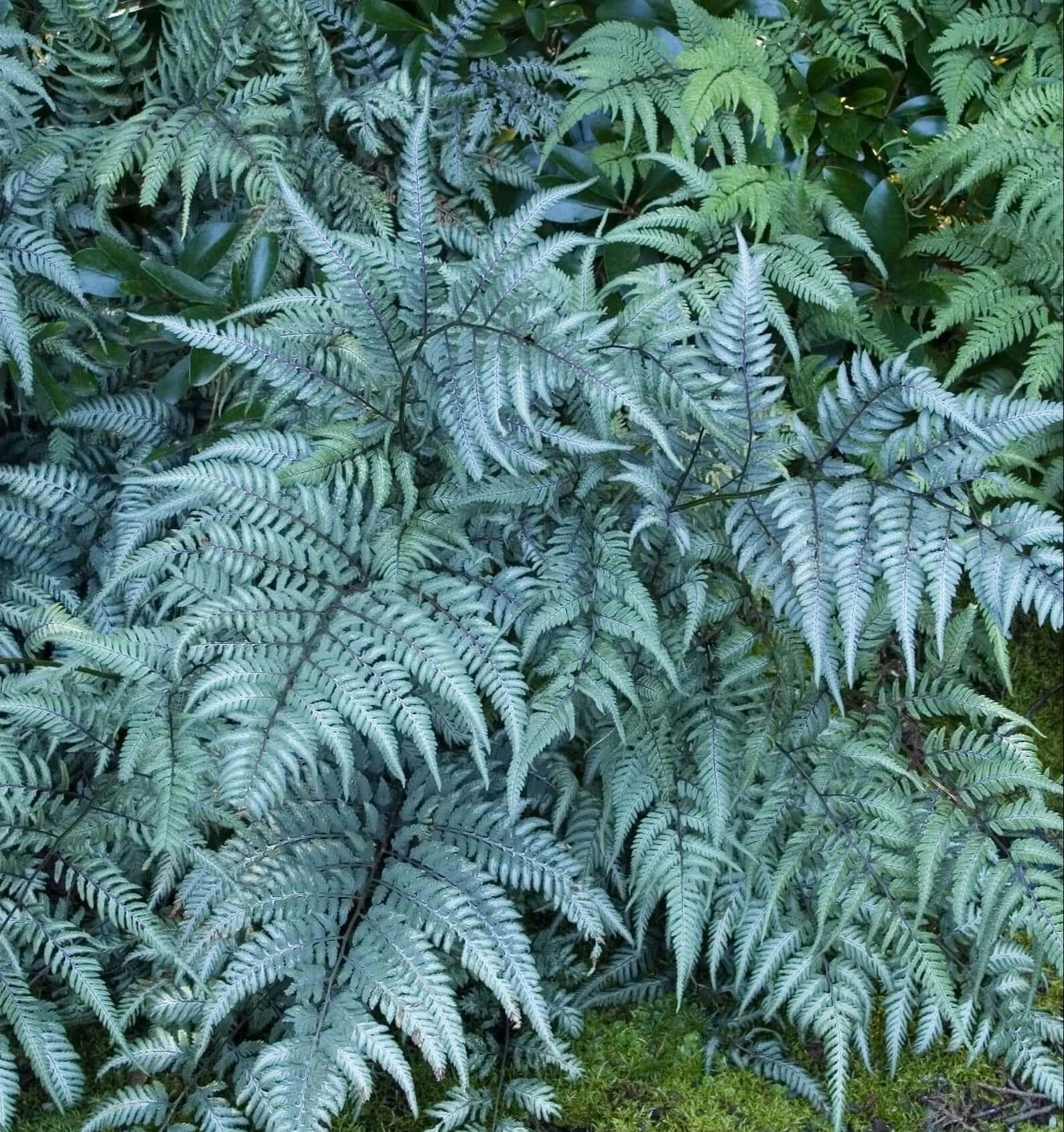
About:
The Japanese Painted fern, or Athyrium niponicum, comes from Eastern Asia. This colorful fern gets its name due to its silver fronds and dark red stems, making it an appealing option to grow at home. While most fronds offer an evergreen backdrop to your garden, this beauty will stand out like a work of art and liven up any space.
How to Care for Japanese Painted Ferns:
| DIFFICULTY: | Medium. |
| LIGHT: | This plant cannot tolerate direct sunlight. It does best in shaded or medium indirect light. |
| TEMPERATURE: | Temperatures around 70F are great for this plant. |
| WATERING: | Water enough to maintain moist soil. |
| FEEDING: | Use a houseplant fertilizer in the spring. |
| TOXICITY: | Pet and human-friendly. |
14) Royal Fern (Osmunda spectabilis)

About:
Royal ferns, or Osmunda spectabilis, are large ferns that can grow up to one meter high. They produce large, light green foliage, adding a bold statement to your indoor decor.
How to Care for Royal Ferns:
| DIFFICULTY: | Medium. |
| LIGHT: | This plant needs partly-shaded or fully-shaded light conditions. |
| TEMPERATURE: | The ideal temperature for this plant is 65 to 75F. |
| WATERING: | Water this plant often enough to maintain moist soil. |
| FEEDING: | Fertilizer is not necessary for this plant. |
| TOXICITY: | Pet and human-friendly. |
15) Blue Star Fern (Phlebodium aureum)

About:
Blue Star Ferns, or Phlebodium aureum, are known for their large fronds. This is a hardy indoor fern that makes a great houseplant. Since it is an epiphytic fern, it doesn’t need as much moisture as other varieties, making it a more tolerant houseplant than other species of this plant.
How to Care for Blue Star Ferns:
| DIFFICULTY: | Easy |
| LIGHT: | Low to medium lighting. |
| TEMPERATURE: | Does best in temperatures ranging from 50 to 80F. |
| WATERING: | Water this plant when the surface soil becomes completely dry. |
| FEEDING: | Use a well-balanced fertilizer once a month or less. |
| TOXICITY: | Pet and human-friendly. |
16) Australian Tree Fern (Cyathea cooperi)

The Australian Tree Fern, native to parts of Australia (as you might have guessed), has large, feathery fronds that can grow several feet long. Its trunk is slender and covered in brown, coarse hairs. I love the fact these ferns are rapid growers (under the right conditions) and work really well as a centerpiece in an indoor garden.
| DIFFICULTY: | Moderate |
| LIGHT: | Bright, indirect light throughout the day. |
| TEMPERATURE: | 65-80°F (18-27°C) |
| WATERING: | Keep soil consistently moist |
| FEEDING: | Monthly during the growing season with balanced liquid fertilizer |
| TOXICITY: | It can be poisonous if consumed by pets or humans |
17) Button Fern (Pellaea rotundifolia)

Native to New Zealand, the Button Fern is known for its unique round, button-like leaflets on arching stems. I think the dark green leaves contrast beautifully with its black stems.
| DIFFICULTY: | Easy |
| LIGHT: | Bright, indirect light throughout the day |
| TEMPERATURE: | 60-75°F (15-24°C) |
| WATERING: | Let the top inch or two dry out before watering again |
| FEEDING: | Every 6-8 weeks with a balanced fertilizer during the growing season |
| TOXICITY: | Non-toxic to pets |
18) Cretan Brake Fern (Pteris cretica)

Originating from Europe and Asia, the Cretan Brake Fern has light green, arching fronds with a lace-like appearance. They can adapt to a variety of conditions, making them suitable for a range of interior living spaces.
| DIFFICULTY: | Easy care |
| LIGHT: | Bright, indirect light throughout the day |
| TEMPERATURE: | 60-75°F (15-24°C) |
| WATERING: | Keep soil consistently moist (it’s worth checking the soil every 3 to 5 days I find) |
| FEEDING: | Monthly with a balanced liquid fertilizer |
| TOXICITY: | Toxic to pets if ingested |
19) Crocodile Fern (Microsorum musifolium)

Native to Southeast Asia, Microsorum musifolium showcases textured leaves that resemble crocodile skin. This fern enjoys a humid environment and is popular for its unique appearance. I find these ferns a little challenging to grow at home as they need lots of moisture, but can be really rewarding.
| DIFFICULTY: | Moderate |
| LIGHT: | Low to medium light |
| TEMPERATURE: | 60-75°F (15-24°C) |
| WATERING: | Keep soil evenly moist (check the soil weekly at a minimum) |
| FEEDING: | Monthly with a balanced liquid fertilizer |
| TOXICITY: | Non-toxic to pets |
20) Delta Maidenhair Fern (Adiantum raddianum ‘Fragrantissimum’)

This variation of the Maidenhair Fern has delicate, fan-shaped fronds. It’s native to the tropics and is known for its soft, lacy appearance and sweet fragrance. They can be tricky to find but are an excellent addition to any indoor fern plant collection.
| DIFFICULTY: | Moderate to Difficult |
| LIGHT: | Bright, indirect light |
| TEMPERATURE: | 60-75°F (15-24°C) |
| WATERING: | Keep soil consistently moist (check the soil weekly) |
| FEEDING: | Monthly during the growing season with balanced liquid fertilizer |
| TOXICITY: | Non-toxic to pets |
21) Hart’s Tongue Fern (Asplenium scolopendrium)

This European native fern is unique due to its undivided, tongue-shaped leaves. Unlike many ferns, Hart’s Tongue ferns have smooth-edged fronds, giving it a chic and modern appearance in my opinion.
| DIFFICULTY: | Easy |
| LIGHT: | Low to medium light throughout the day |
| TEMPERATURE: | 60-75°F (15-24°C) |
| WATERING: | Keep soil moist but not soggy |
| FEEDING: | Every 6-8 weeks with a balanced fertilizer during the growing season |
| TOXICITY: | Non-toxic to pets |
22) Kangaroo Paw Fern (Microsorum diversifolium)

Originating from Australia, the fern’s fronds resemble the paws of a kangaroo. It has irregularly shaped, long, and leathery fronds. These ferns work great on window ledges and bright, sunny spots throughout the home or office.
| DIFFICULTY: | Easy |
| LIGHT: | Bright, indirect light |
| TEMPERATURE: | 60-75°F (15-24°C) |
| WATERING: | Keep soil consistently moist |
| FEEDING: | Every 6-8 weeks with a balanced fertilizer during the growing season |
| TOXICITY: | Non-toxic to pets |
23) Lady Fern (Athyrium filix-femina)

A native to Northern Hemisphere temperate regions, Lady Fern is popular for its delicate, lacy fronds that are bright green in color. In my experience, they require a little more work than other types of ferns but stand out for their elegant appearance.
| DIFFICULTY: | Moderate |
| LIGHT: | Bright, indirect light |
| TEMPERATURE: | 60-75°F (15-24°C) |
| WATERING: | Keep soil consistently moist (check weekly at a minimum) |
| FEEDING: | Monthly with a balanced liquid fertilizer during the growing season |
| TOXICITY: | Toxic to pets if ingested |
24) Rosy Maidenhair Fern (Adiantum hispidulum)

Native to the Australasia region, this fern is similar to the Delta Maidenhair but is characterized by its rosy-colored new growth. I find this coloring makes a lovely contrast against the classic forest green of most types of ferns.
| DIFFICULTY: | Moderate |
| LIGHT: | Bright, indirect light throughout the day |
| TEMPERATURE: | 60-75°F (15-24°C) |
| WATERING: | Keep soil consistently moist. Typically, you’ll need to water every 5 to 7 days. |
| FEEDING: | Monthly during the growing season with balanced liquid fertilizer |
| TOXICITY: | Non-toxic to pets |
25) Sensitive Fern (Onoclea sensibilis)

Native to North America and East Asia, it’s called “sensitive” due to its intolerance to frost. However, you shouldn’t have these issues if you’re growing one indoors. Its fronds are light green, coarse, and have a unique bead-like structure.
| DIFFICULTY: | Moderate |
| LIGHT: | Bright, indirect light |
| TEMPERATURE: | 60-75°F (15-24°C) |
| WATERING: | Keep soil consistently moist (you’ll typically need to water weekly at a minimum) |
| FEEDING: | Monthly with a balanced liquid fertilizer during the growing season |
| TOXICITY: | Non-toxic to pets |
26) Sword Fern (Polystichum munitum)

Native to western North America, the Sword Fern has long, leathery, sword-like fronds that are deep green in color. It’s very adaptable and can tolerate various conditions, making this one of my go-to ferns for easy care.
| DIFFICULTY: | Easy |
| LIGHT: | Low to medium light |
| TEMPERATURE: | 60-75°F (15-24°C) |
| WATERING: | Allow the top inch to dry out before watering (usually every seven days or so). |
| FEEDING: | Every 6-8 weeks with a balanced fertilizer during the growing season |
| TOXICITY: | Non-toxic to pets |
How to Grow Indoor Ferns at Home

Here are a few general pointers to follow when growing ferns at home.
What to do Before Planting Indoor Ferns:
Here are some essential tips to follow before planting your new fern.
- Have a moisture-retaining pot on hand for repotting. However, if your fern comes in a plastic container, repotting may not be necessary. Simply drop the nursery pot into your decorative potting vessel.
- Ensure you have the correct tools and soil to care for your fern before bringing it home. We’ll list these in detail below.
- Find the ideal location for your new fern, whether hanging it in a planter or in a nice indoor area.
How to Plant Indoor Ferns:
Simply put, virtually all types of ferns need a lot of moisture. With that said, you’ll want to plant ferns in a pot made of moisture-retaining material like plastic. The ideal pot size will depend on the size of your fern, and if the roots have become overcrowded, you can divide the plant to offer it more room to grow. Only use a pot slightly larger than these new plants when repotting them.
What’s the Best Soil Mix for Indoor Ferns?
Because indoor ferns love moisture but need continual drainage, it is essential to use a fern-specific soil mix. You can buy commercial fern soil or mix a rich compost with sand and peat moss.
I also like Bloomscape’s house-blend soil mix for houseplants.
How to Care for Indoor Ferns

Now, let’s look at some care tips to ensure your fern stays happy and healthy.
- Because they are tropical plants, ferns need a lot of moisture. Make sure your plant’s soil stays moist without becoming soggy. You’ll typically need to water ferns at least weekly, and potentially more during the warmer months of the year.
- If ferns overcrowd their pots, they will need repotting. This is a fantastic opportunity to divide your plants and make more beautiful plants to decorate your home.
- Most ferns are considered shade plants, but each fern’s care requirements are slightly different. Research your specific type of fern to learn its lighting needs.
Indoor Ferns Pruning Tips
A great time to prune your fern is before their growing season begins in the spring. Here are a few tips for pruning your indoor fern.
- Use sharp pruning shears to trim any dead foliage from your fern. This will help make room for more growth.
- Since this plant has a lot of foliage, you may want to move it outdoors to avoid a mess when pruning.
- Trim around the edges of your fern if you want to add a bit of shape to the plant.
- As dead fronds and foliage appear, trim them away to preserve your plant’s energy.
Indoor Fern Propagation Tips
You cannot propagate your fern using its foliage. However, you still have a few options for propagating your plant. Here are some pointers for doing so.
- Division is the most common way to propagate your fern. If your fern has creeping rhizomes, you can divide it up, ensuring the segments are three or four inches long and contain a minimum of one bud. Otherwise, gently cut and separate roots to establish new, smaller plants.
- Replant divided ferns in separate pots in similar conditions to their previous environment.
- If your mature fern has multiple crowns, you can separate and repot them to establish two individual plants.
When and How to Re-pot Indoor Ferns
You can re-pot your fern yearly to keep up with its growth. You’ll only need a pot about one size larger to accommodate your plant when repotting. Here are a few more tips for repotting your fern.
- Select a moisture-retaining pot one size larger than your plant’s current container. Ensure the container offers around one inch of additional space around the plant.
- Gently remove your fern from its current container, ensuring the root ball stays intact.
- Add soil to the new container and place your fern into its new home.

Here are a few pest and disease considerations to keep in mind when taking care of your fern:
- Mealybugs
- Nematodes
- Mites
- Aphids
- Scale
- Thrips
- Snails
- Blight and frond lobing in bird’s nest ferns
- Graying due to dry soil in Boston ferns
Common Indoor Fern Problems and How to Treat Them
The main issues with ferns come from their lighting and water needs. This tropical plant needs plenty of moisture and does not do well in direct sunlight. Here are a few other tips to keep in mind.
- Ensure not to overwater or water into the plant’s rosettes, as this can lead to rotting.
- This plant’s leaves will begin to burn at the tips if over-fertilized.
- As long as you can maintain the optimal growing conditions for your specific fern variety, you’ll have no problem keeping this plant happy and healthy.
Through this guide, we have listed the tools you need to keep your fern healthy. Let’s review. To grow a happy fern, you will need to following tools.
- A moisture-retaining pot and tray
- Fern-specific, well-draining soil
- Watering Can
- Sharp shears for pruning
- Fertilizer depending on your specific fern variety
Why are Indoor Ferns Popular?

Indoor ferns are popular as houseplants because they add a pop of bright color and creative natural structure to any room. There are small varieties, ferns up to six feet tall, hardy, and more delicate options, so you can own an ancient tropical plant no matter how skilled you are at gardening. With long, flowing fronds, incredible texture, and bright color, it’s no wonder so many gardeners are attracted to this plant.
Most ferns are known as leptosporangiate ferns, which grow coiled fiddleheads that later become fronds. This group of ferns contains around 10,560 identified species. Certain varieties are more popular than others when it comes to indoor gardening, but this number indicates just how varied the plant truly is.
Meanings and Symbolism of Indoor Ferns
During the Victorian era, fern collecting grew so popular that there was a name for it. Pteridomania was the act of gathering ferns or using them in decorative art, like pottery or textiles.
Ferns also show up in folklore. In Slavic tradition, anyone who sees a rare fern flower will receive happiness and riches for life.
Finnish folklore says anyone who holds a fern’s seed on Midsummer night will be able to move about invisibly to seek hidden treasure. In the US, ferns are said to contain magical properties, warding off evil spirits if thrown into burning coals.
Additionally, ferns are commonly associated with the astrological star sign of Libra.
General Benefits of Keeping Indoor Ferns
In addition to their beauty, ferns are great at purifying the air in your home. They remove pollutants like formaldehyde and xylene, helping you breathe easier and sleep better. The air-purifying properties of ferns are even thought to aid with headache relief.
Ferns also look great in both small and tiny apartments in addition to larger, more open spaces.