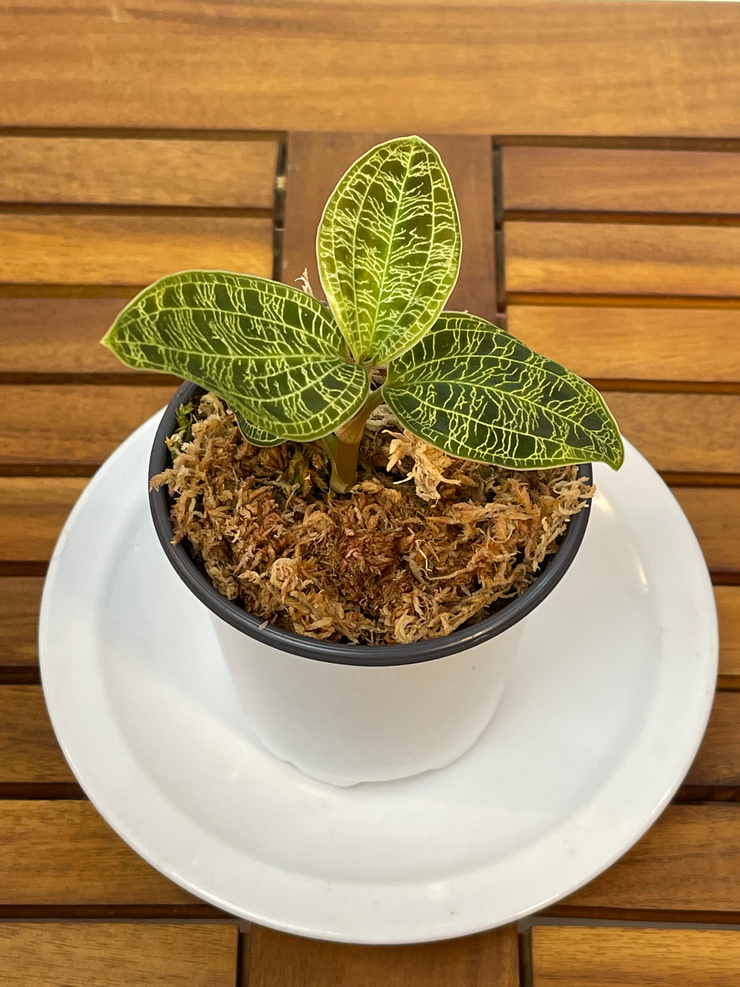
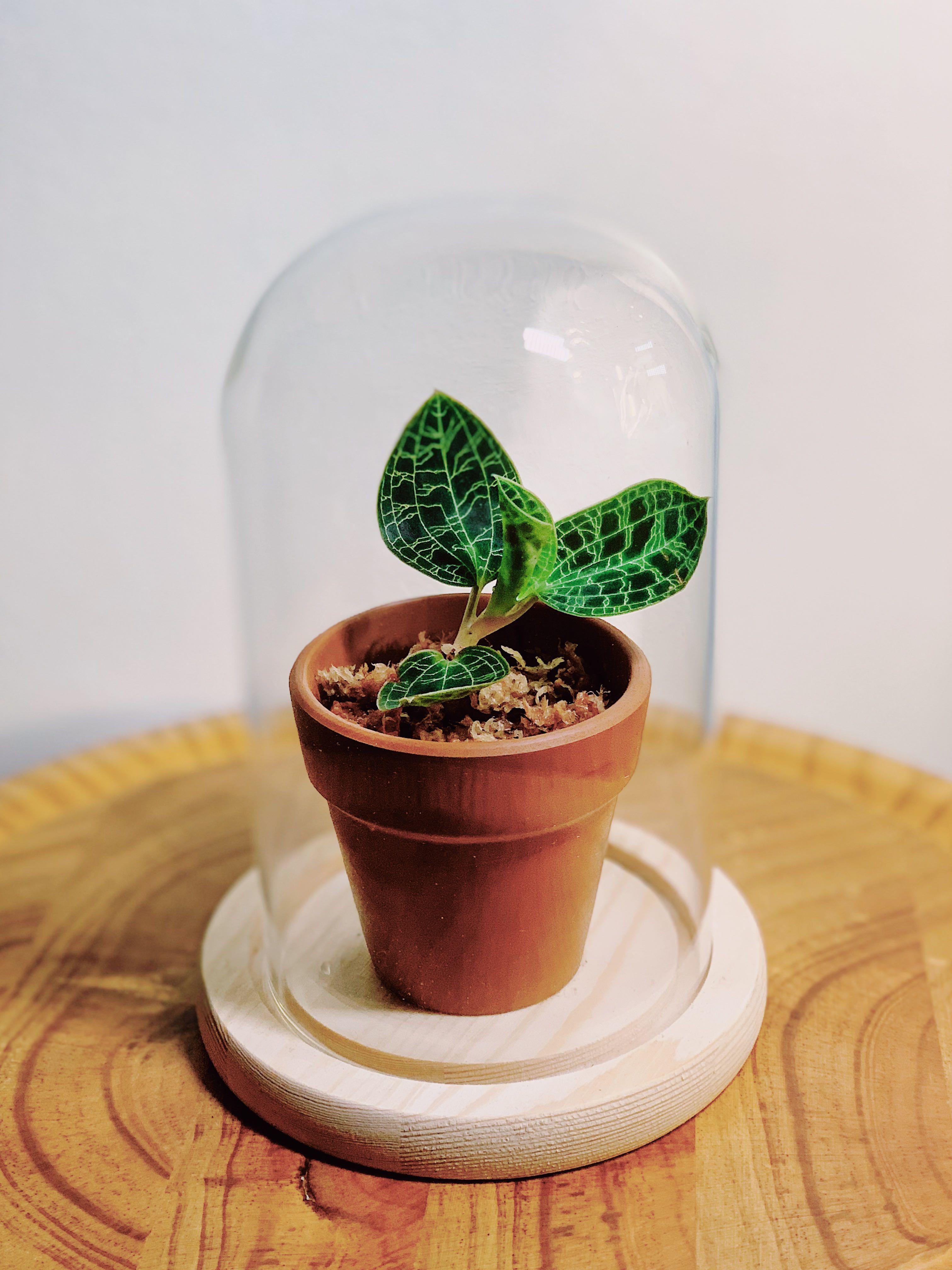
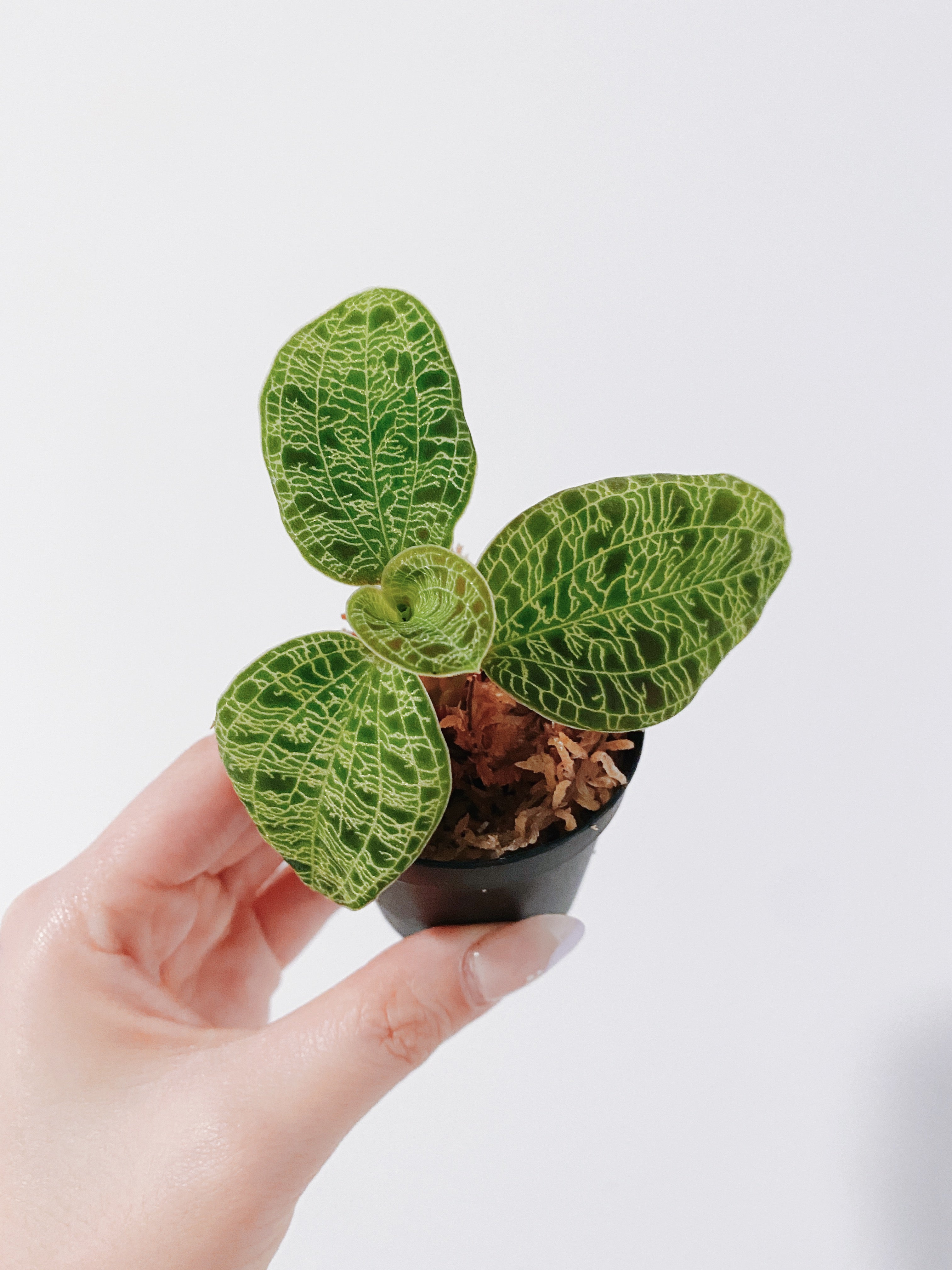
The stunning foliage of Jewel orchids such as Macodes petola and Ludisia discolor never fails to amaze me. These delicate plants impress with their intricate leaves that literally sparkle in the light. Whilst not as hard to care for as they look, there are a number of Jewel orchid problems that can cause issues and prevent your plant from thriving.
The most common Jewel orchid problems are root rot, secondary to overwatering or poorly draining growing media, and brown, curling leaves secondary to low humidity or excess light. Spotting the early signs of these problems is crucial so that you can adjust their care.
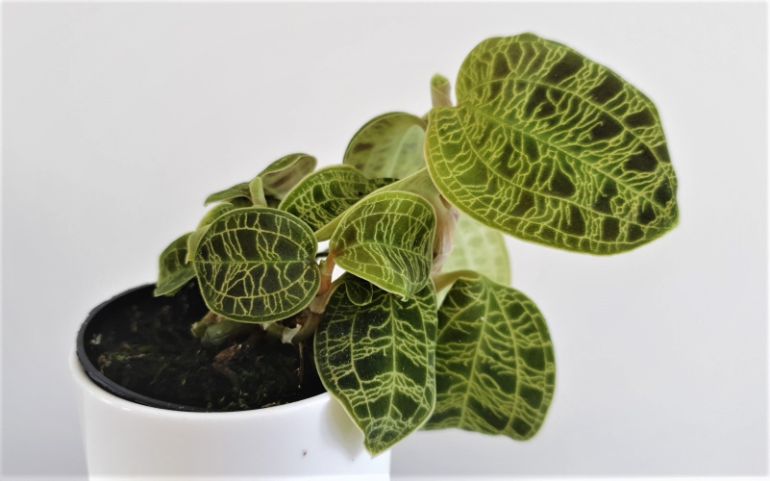
11 Jewel Orchid Problems And How To Fix Them
Let’s look at each of the common Jewel orchid problems, in turn, to help you work out what the issue is with your plant. I always find it is best to look at both the care conditions your plant has been experiencing, and the symptoms it is displaying, to help you work out what the issue is. Once you know the cause, fixing the issue should be pretty simple.
Why Is My Jewel Orchid Dying?
Watering problems are by far the most common cause of a Jewel orchid dying. You should check how wet the potting medium is, as well as take note of any factors that are causing the medium to stay wet for a long time, or to dry out too quickly.
Bear in mind that the size of the pot, pot material, and drainage, growing medium, lighting, and temperature all play crucial roles in how fast the potting medium dries out after watering and can contribute to watering problems that will cause your Jewel orchid to struggle.
If you notice that your Jewel orchid appears to be dying, it’s important to act quickly. You should immediately inspect your plant to look for the following symptoms.
- Yellowing leaves – Generalised yellowing is often a sign of overwatering
- Leaves curling – This indicate the leaves aren’t getting enough water, or are drying too quickly. It’s most likely to be caused by underwatering, root rot, low humidity, or excess heat and light.
- Leaves turning brown – Excess direct sunlight can cause leaf scorching and low humidity can cause crispy leaf edges. Occasionally a lower leaf will turn brown and shed naturally.
- Root rot – Excessively wet, soggy conditions can cause root rot. The roots will become mushy, black, fragile, and may smell. The leaves may develop yellowing, but can also curl and get brown tips once the roots stop working.
- Leaf spotting – Can be caused by pests, disease, fertilizer burn, or highly mineralized water.
Once you have inspected your plant carefully, you are likely to have a list of potential issues that may need fixed. Let’s look at each problem in a little more detail to help you make the right changes to help your plant.
Jewel Orchid Leaves Turning Yellow
The most common cause of Jewel orchid leaves turning yellow is overwatering. If the roots are left in a soggy, poorly aerated growing medium, the leaves will start to become generally yellow due to chlorosis. This often starts with the lower leaves, but will quickly spread to affect the entire plant.
Yellow spots on the leaves can be due to pests, so take care to inspect both sides of each leaf, as well as along the stems and even in the soil for any pests that are feasting on your poor plant.
You may also see a lower leaf turning completely or partially yellow. This is usually due to natural leaf loss, and shouldn’t cause undue concern. It can be triggered by recent stress, such as repotting or moving your Jewel orchid.
Jewel Orchid Leaves Curling
Jewel orchid leaves curling is a mechanism your plant uses to prevent excessive water loss. Jewel orchid leaves often curl a little bit naturally, but excessive curling is often due to low humidity, underwatering, excess light, or heat, but can also be a sign of established root rot.
The key to determining whether this is an issue is to consider whether there has been a significant change in curling over time. I find that most leaves curl to a certain extent, but if I see sudden curling that happens over the space of a few days or a week, I know I must check my plant carefully for any signs of problems.
Make sure your Jewel orchid is out of direct sunlight, as this can cause the leaves to curl as water is lost rapidly from the foliage. I also like to monitor humidity using a digital hygrometer, aiming to keep humidity above 50%. In my experience, Jewel orchids aren’t as sensitive to lower humidity as many assume, and mine has previously spent weeks in humidity as low as 40% without any major issues.
Jewel Orchid Leaves Turning Red
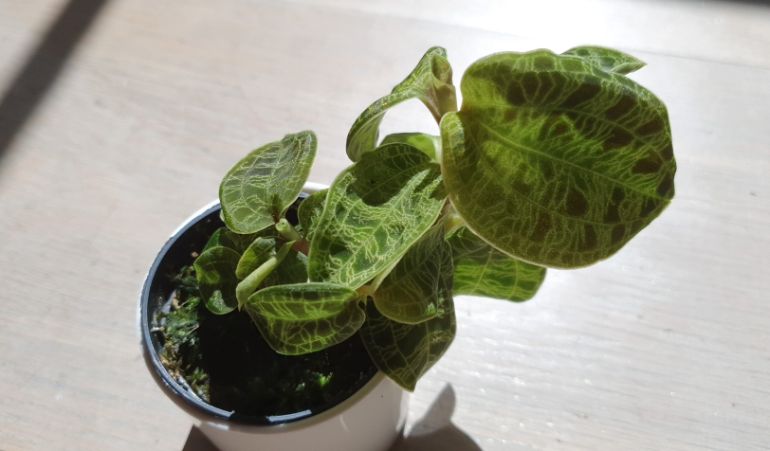
Jewel orchid leaves turning red is usually a sign your plant is getting excessive light. Increased light stimulates the plant to produce pigments called anthocyanins in the leaves, which help to protect your plant from sun damage. Some Jewel orchids have leaves that have some natural red coloration.
Although a Jewel orchid can tolerate a little early morning or late evening sunshine, it will do best if kept in bright, indirect sunlight. Don’t overcompensate by placing your Jewel orchid somewhere dull. There is a happy medium that will promote vigorous growth without damaging the foliage.
Overwatering
Overwatering Jewel orchids results in soggy soil conditions that lead to root rot, which can lead to the death of your plant. Any factor that prevents the growing medium from drying out can contribute to this issue. Overwatering is the most common of all Jewel orchid problems, but it has a number of causes.
You should keep the growing medium slightly moist at all times to prevent your Jewel orchid from wilting, but the roots also need oxygen to survive, so it is essential to ensure drainage is excellent, to remove excess water after watering.
Although you shouldn’t water on a schedule, if your Jewel orchid’s growing medium is taking more than a week to dry sufficiently to be ready for more water, there is a risk of overwatering issues. Consider repotting into better draining potting mix. I normally use pure sphagnum moss for my Jewel orchids, although this does compact over time. Repotting, or mixing sphagnum with perlite, LECA, or bark chips will help to prevent this and improve drainage.
Your choice of pot can also be a major factor in causing overwatering issues for your Jewel orchid.
- An excessively large pot will hold too much water in the soil for the plant to use in a timely manner, greatly increasing the risk of overwatering problems.
- Non-porous pot materials such as plastic and metal hold water in the potting mix for much longer than terracotta pots, increasing the risk of overwatering issues. See more about pot materials here.
- Pots with few or no drainage holes are not good at draining excess water from the growing medium after watering. Make sure to choose a pot where excess water will have no problems draining out of the pot.
Other factors such as low light, cool temperatures, and excessively high humidity all reduce the rate at which your Jewel orchid uses water and the rate at which water evaporates from the growing medium. Simply moving your Jewel orchid from low light to a brighter location can sometimes be enough to solve the problem.
Does My Jewel Orchid Have Root Rot?
The end result of soggy conditions is root rot, and this usually results in a Jewel orchid dying. The symptoms of root rot are not always the most intuitive to spot, as it can partially mimic water deficiency if you don’t consider everything.
Soggy conditions initially provide water surplus, causing generalized leaf yellowing and sometimes evidence of leaf edema. However, as the roots start to struggle and fail, they can no longer provide water to the plant, and water deficiency kicks in. You may then see generalized leaf curling, brown leaf tips, and drooping.
The key to identifying root rot lies in taking all the symptoms and the growing conditions in combination, rather than looking at just one or two factors.
If you think your Jewel orchid has root rot, carefully take it out of the pot to inspect the roots. Rotten roots are typically black/brown, mushy, fragile, and often have an unpleasant odor. If the problem is minor, you can try pruning the affected roots and repotting your plant in a fresh pot and fresh potting mix.
Bear in mind that most Jewel orchids will not survive root rot unless caught early, and even those that do survive will take several months to fully recover.
Jewel Orchid Leaves Turning Brown
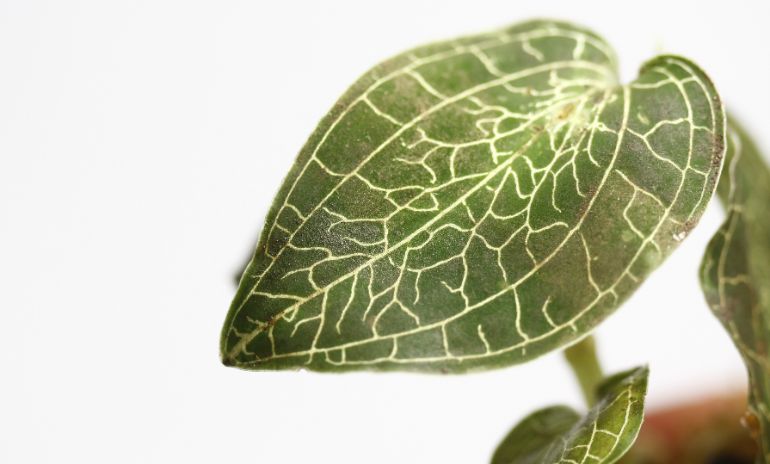
The most common reasons for Jewel orchid leaves turning brown are leaf scorching due to excess sunlight, and old leaves dying naturally. Brown spots or leaf tips can be due to other things such as low humidity, watering problems, overfertilizing, pests, or water quality.
Jewel orchids require bright, indirect light, rather than full sun, and will scorch quickly in excess direct sunlight. Keep an eye on your plant to see how much light it is getting at different times of the day. Be particularly cautious of seasonal changes, as the lighting in one spot in your home can go from inadequate in winter, to excessive in summer. You may have to move your Jewel orchid through the year to provide perfect lighting.
Acclimation
Bear in mind that Jewel orchids are quite sensitive to major changes in their growing conditions. After you bring your plant home from the store, it may take many weeks or even a few months for your plant to adapt to the new growing conditions. During this time, you may see some deterioration of the foliage, even if you are providing excellent care conditions.
The key with acclimation is not to panic. Simply review my Jewel orchid care guide and make sure you are providing good growing conditions. After this, have patience and your plant should start producing new, healthy growth before long.
Jewel Orchid Damage In Transit
I have purchased a number of Jewel orchids online, and shipping always comes with some worry about what state my plants will arrive in. Generally, I’ve been surprised how well most sellers package their plants, and they normally arrive in perfect condition.
However, bear in mind that damage can occur in transit, and this can be very disappointing. Try to avoid pruning off damaged leaves as they will still be useful to the plant, even if they don’t look great. Just focus on providing good care, and soon your plant will have many more healthy leaves to replace those that are damaged.
Jewel Orchid Drooping
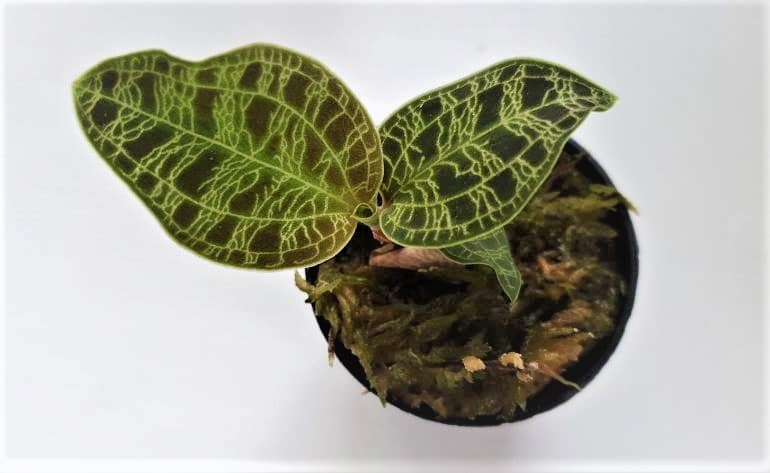
The most common causes of a Jewel orchid drooping are related to watering problems. You’ll need to carefully determine whether your plant is underwatered, or whether it is suffering from root rot due to soggy growing conditions.
Bear in mind that Jewel orchids do have quite a drooping, creeping growth habit at the best of times, so make sure your plant is actually unwell before you take drastic action.
Overfertilizing
Excessive fertilizer can cause fertilizer burn on your Jewel orchid, which will show as brown patches or edges on the leaves. Jewel orchids only need to be fertilized sparingly. Make sure brown patches are not being caused by excess sun, low humidity, or pests before assuming that overfertilizing is the cause.
I normally fertilize my Jewel orchids once every 3-4 weeks in the spring and summer. I use a balanced, water-soluble fertilizer diluted to 1/4 of the strength recommended for other plants. This reduces the risk of damaging your plant with excess fertilizer. See my guide to fertilizing houseplants to learn more.
It is also good practice to flush the potting medium with plenty of water on a regular basis to prevent fertilizer salt build-up. I do this routinely almost every time I water, letting the water run freely through the potting medium when watering.
Jewel Orchid Pests
The most common Jewel orchid pests are spider mites, fungus gnats, mealybugs, and thrips. Jewel orchids are not particularly susceptible to pests, and good care conditions greatly reduce the risk. Check your plant carefully for pests each time you water it, and act quickly to treat any infestation.
This is my process for dealing with pest infestations;
- Immediately isolate your plant from any other plants.
- Rinse off, or manually remove any visible pests.
- Spray the entire plant and soil with a suitable insecticide. I prefer to use horticultural oil or isopropyl alcohol.
- Repeat the treatment every 5-7 days for several weeks until you are absolutely sure all the pests are gone.
- You can then cautiously move your plant back to its normal spot.
Last Word
Hopefully, I’ve covered all of the common Jewel orchid problems you may be experiencing and your plant will soon be on the road to recovery. If you’re struggling with any other aspects of looking after your houseplants, check out some of the articles listed below, or take a look at my book, “Houseplants Made Easy”.