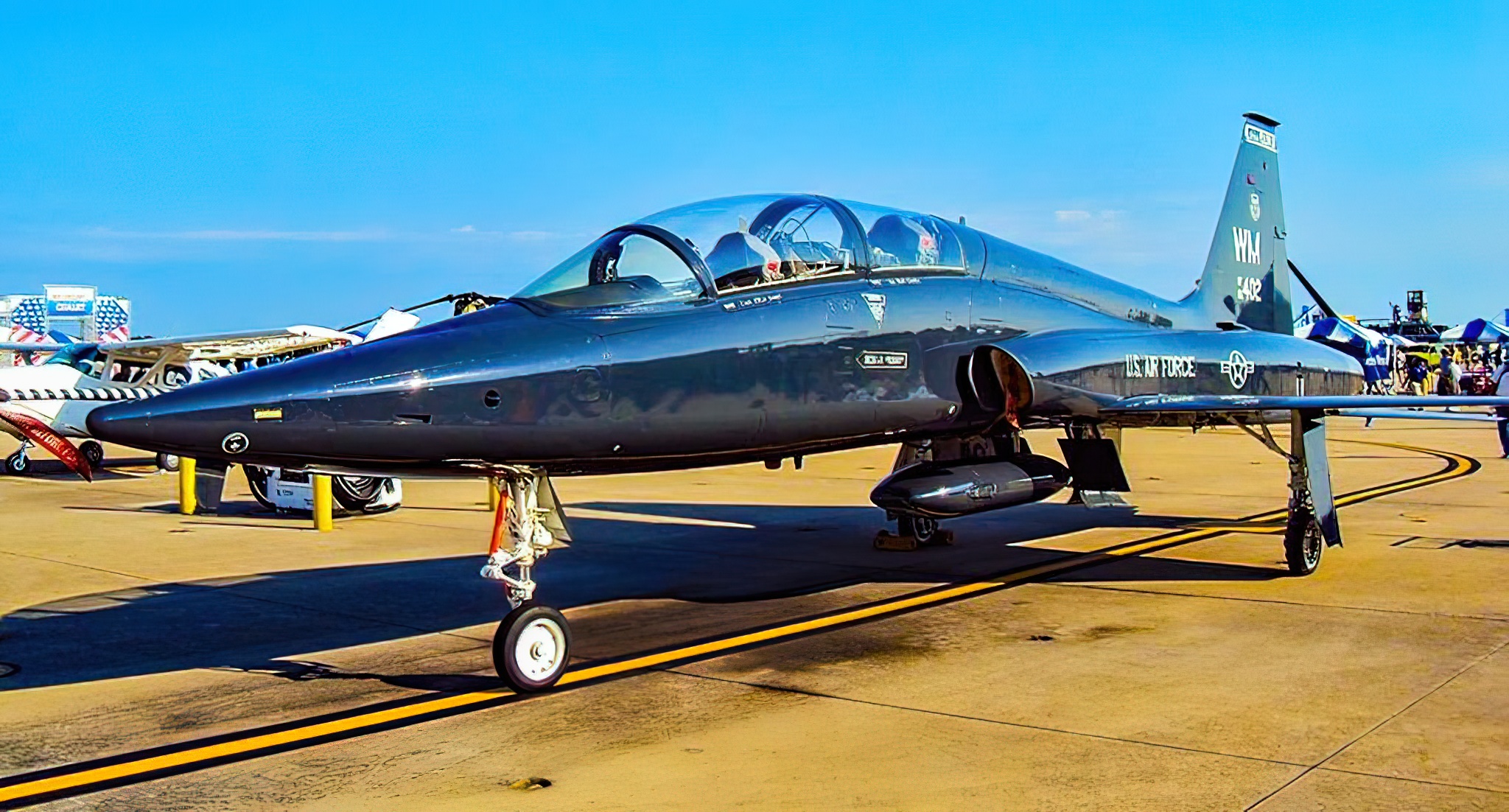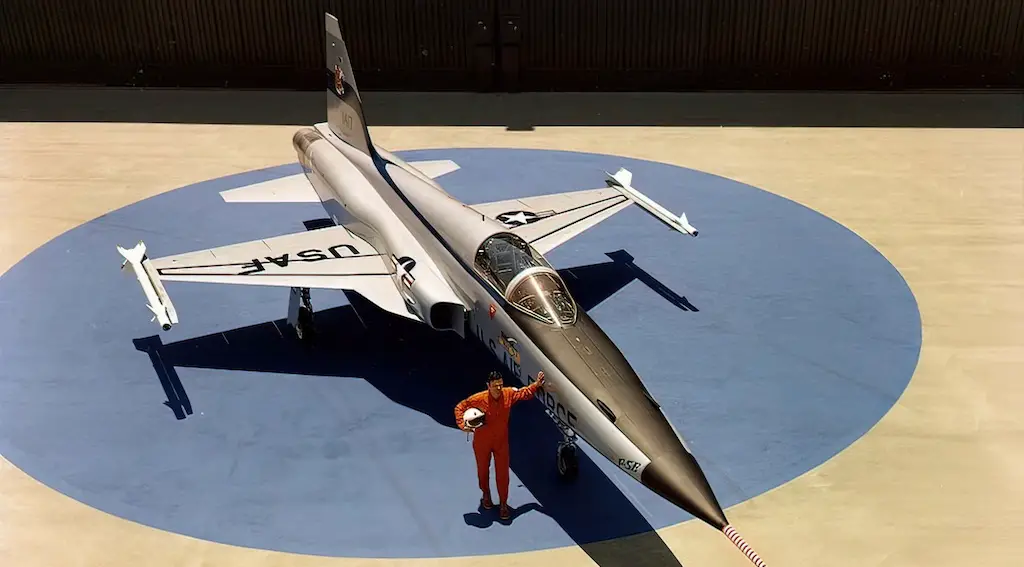
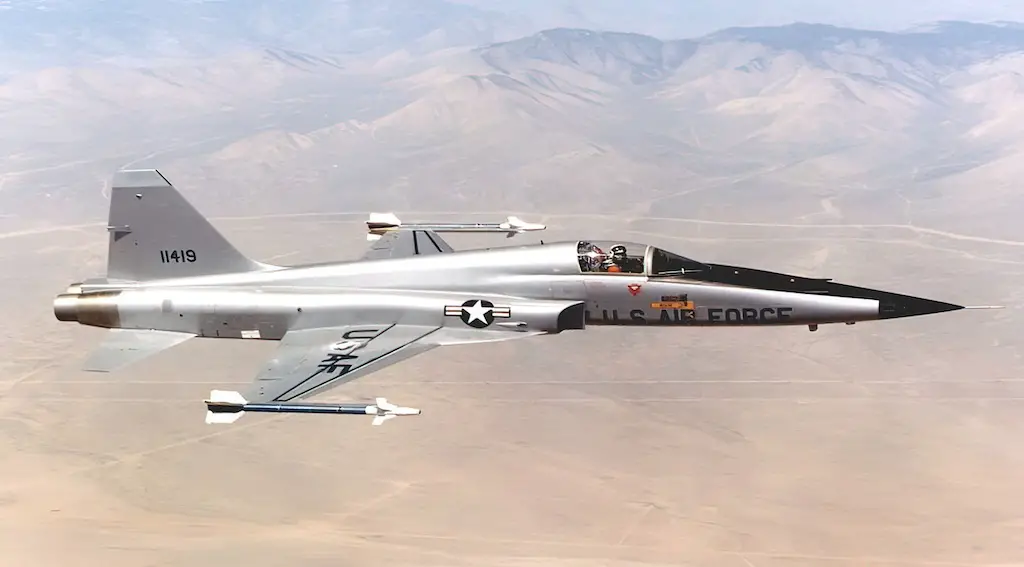
The Northrop F-5 is small, doesn’t have a powerful engine, and only has two hard points for air-to-air missiles. Still, the fact that this third-gen is still in service today, is a testimony that it’s good at what it’s supposed to do. The F-5 is a fast, maneuverable, and dependable supersonic fighter that combines an excellent aerodynamic design, engine performance, and low operating costs. Northrop Grumman built over 2,600 under co-production and licensing agreements with Canada, the Republic of China, the Republic of Korea, Spain, and Switzerland.
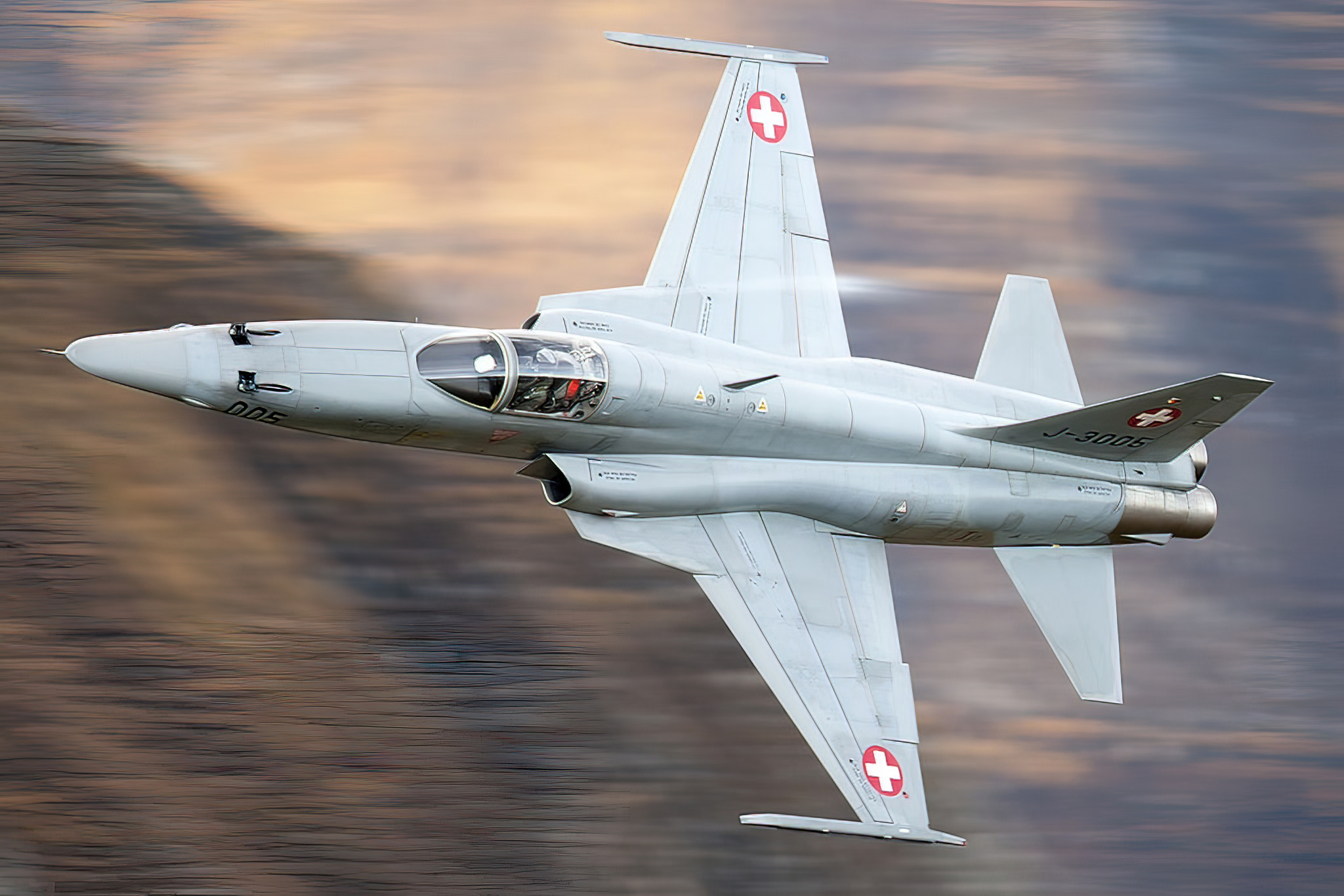
Development
Northrop developed the F-5 as a privately sponsored light fighter program in the 1950s. The Kennedy Administration reintroduced the need for a low-cost export fighter, selecting the N-156F as the winner of the F-X competition on April 23, 1962, which became the “F-5A” and was ordered into production in October of that year. It received its designation as part of the 1962 United States Tri-Service aircraft naming scheme, which included a re-set of the fighter number series.
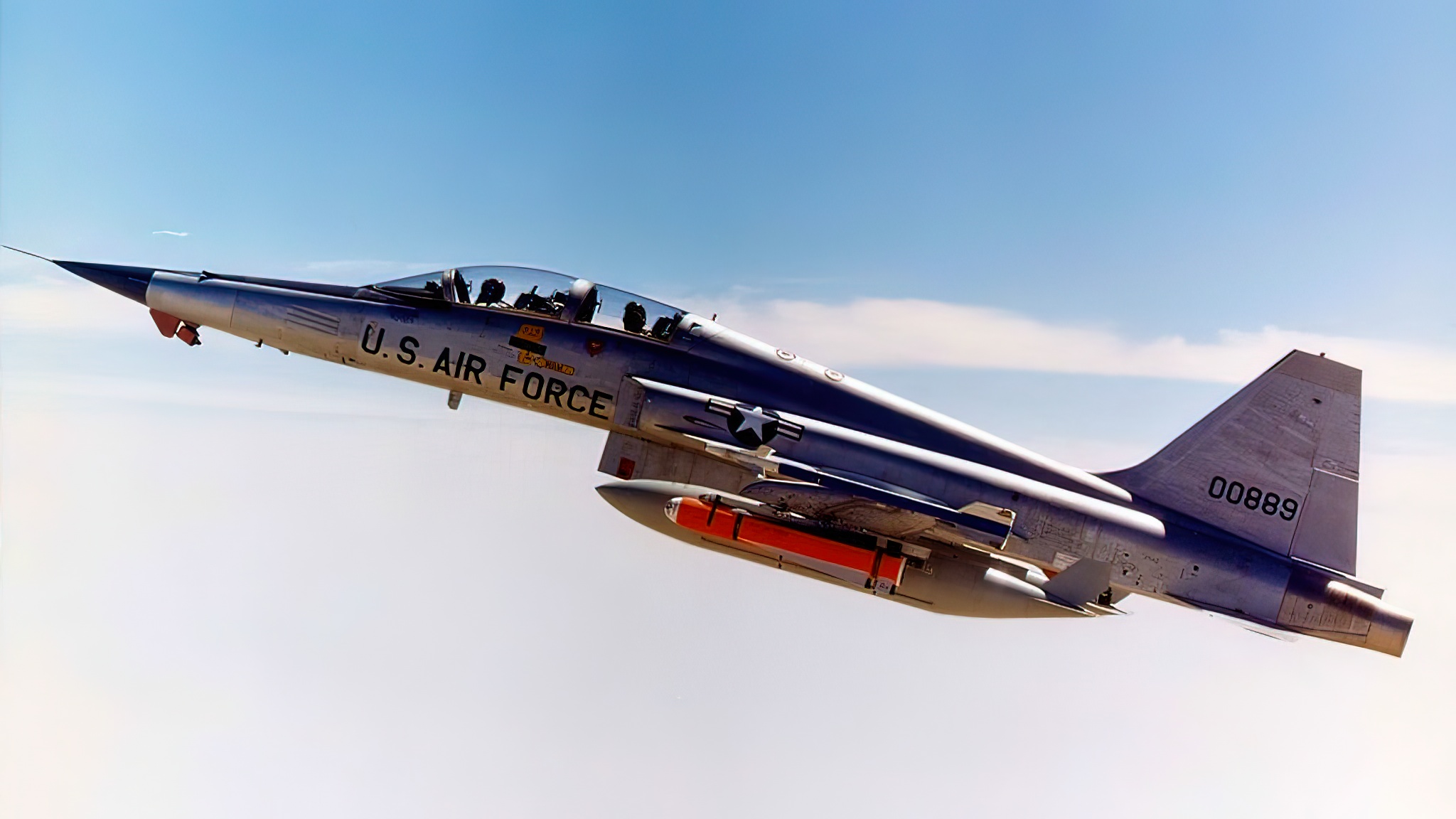
Before manufacturing ended in 1972, Northrop produced 624 F-5As. These were accompanied by 200 F-5B two-seaters. These were operational trainers that lacked the nose-mounted cannon but were otherwise combat-capable, whereas 86 RF-5A reconnaissance variants of the F-5A were manufactured with a four-camera nose. Furthermore, Canadair constructed 240 first-generation F-5s under license, with CASA in Spain adding an additional 70 aircraft.
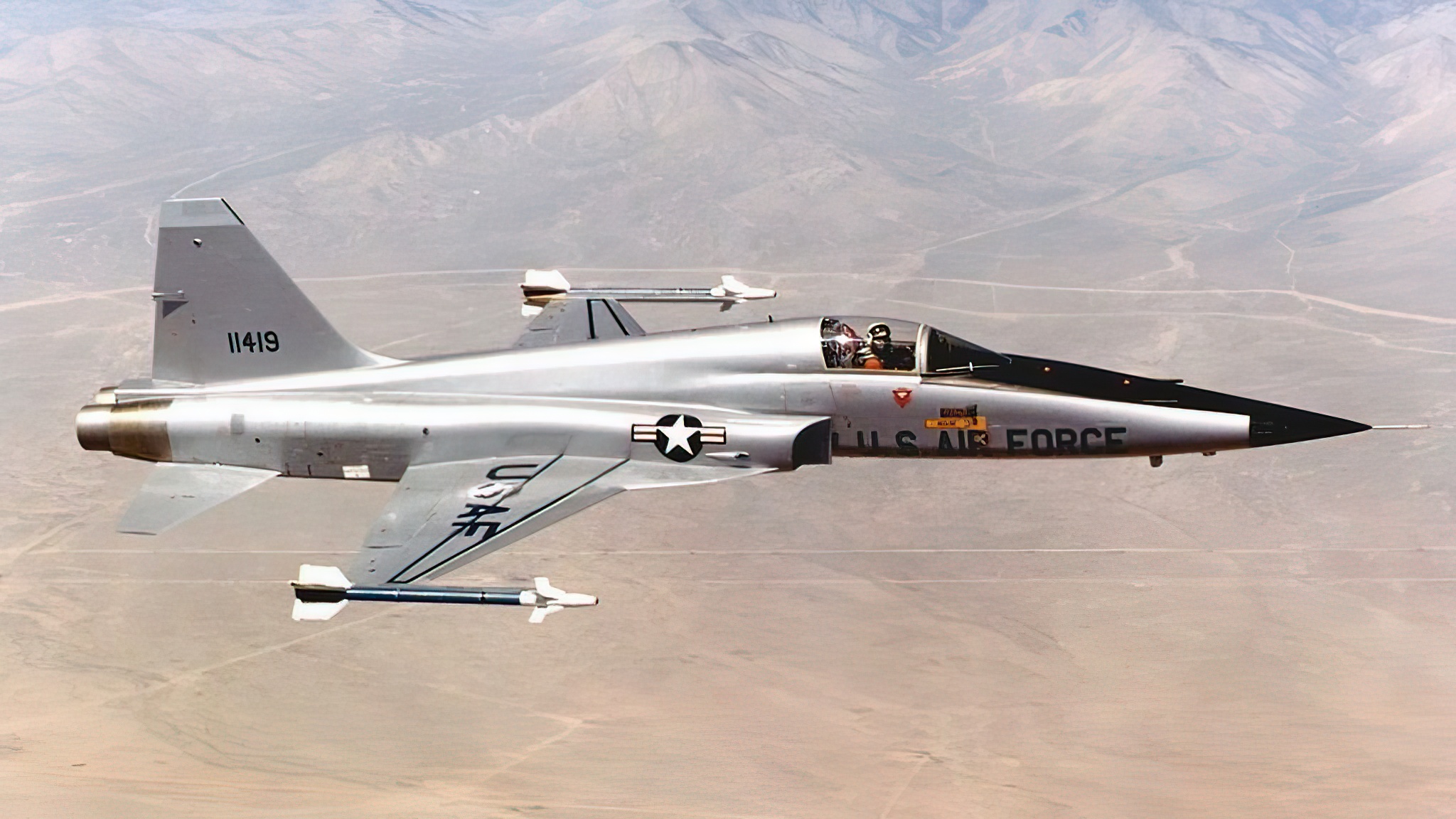
Northrop won the International Fighter Aircraft (IFA) competition in 1970 to replace the F-5A with a better air-to-air performance than the Soviet MiG-21. The resulting aircraft, initially known as the F-5A-21, was later renamed the F-5E. It had more powerful General Electric J85-21 engines (5,000 lbs) and a longer and larger fuselage to accommodate more fuel.
Its wings were equipped with larger leading edge extensions, increasing wing area and improving maneuverability. The aircraft’s avionics were more advanced, including a radar. It kept the F-5A’s gun armament of two M39 guns, one on either side of the nose. Various avionics fits, such as an inertial navigation system, TACAN, and ECM equipment, could be accommodated at the customer’s request.
Upgrades
Throughout its service life, the F-5E received various upgrades, the most significant of which was the adoption of a new planar array radar, Emerson AN/APQ-159 with a range of 20 nmi, to replace the original AN/APQ-153. Similar radar modifications were proposed for the F-5F, including a derivative of the AN/APQ-159, the AN/APQ-167, to replace the AN/APQ-157, but were canceled.
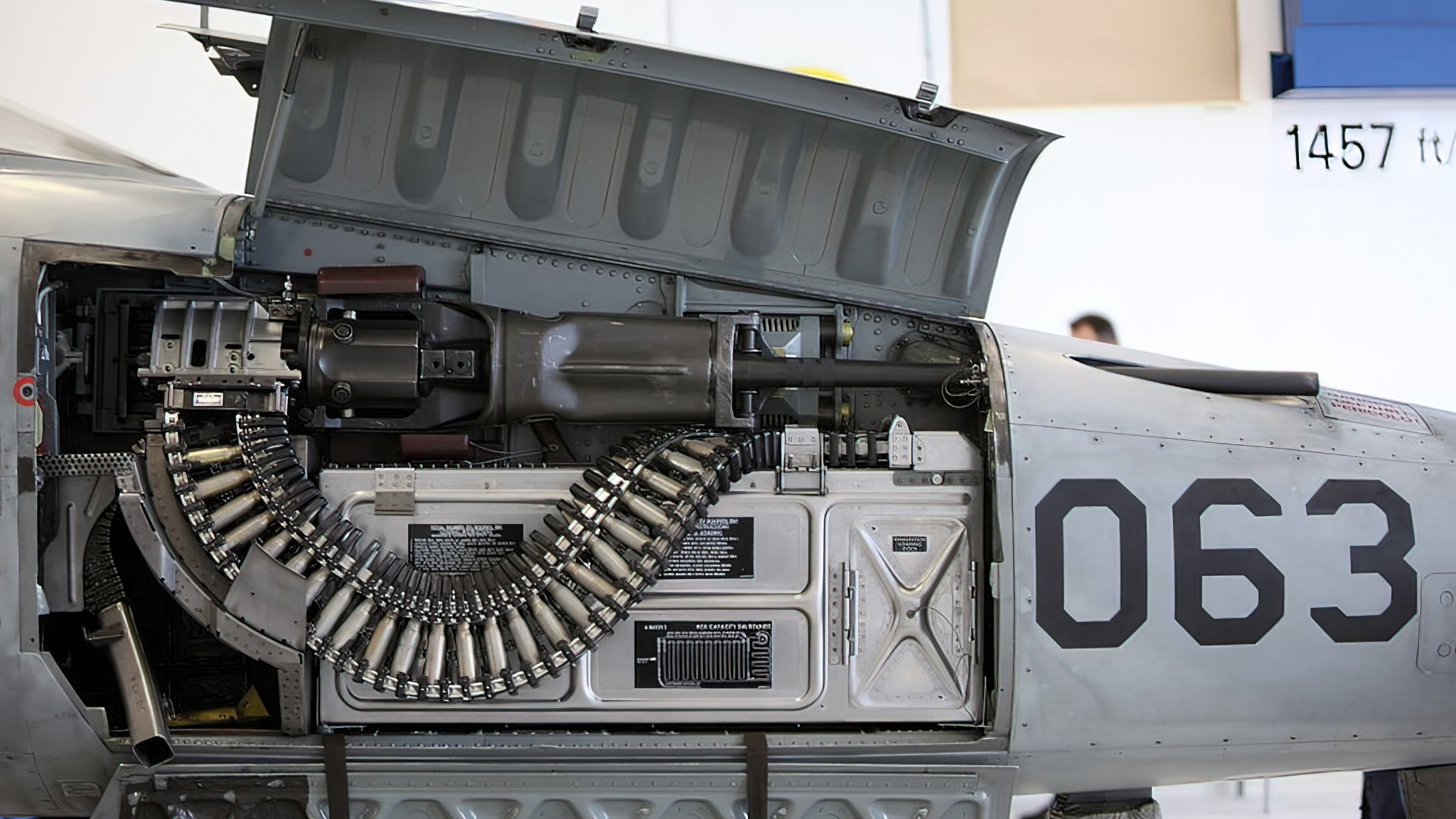
The most recent radar upgrade was the Emerson AN/APG-69, which replaced the AN/APQ-159 and added mapping capability. However, for economic reasons, most nations elected not to modernize, and the radar saw relatively little use in USAF aggressor squadrons and the Swiss air force.
Variants
Many countries still use various F-5 variants. Singapore has 49 F-5S (single-seat) and F-5T (two-seat) aircraft that have been modified and renamed. Galileo Avionica’s new FIAR Grifo-F X-band radar (comparable in performance to the AN/APG-69), improved cockpits with multi-function screens, and compatibility with the AIM-120 AMRAAM and Rafael Python air-to-air missiles are among the enhancements.
One NASA F-5E was given a modified fuselage form in order to participate in DARPA’s Shaped Sonic Boom Demonstration program. It is kept at Titusville, Florida, at the Valiant Air Command Warbird Museum. The Royal Thai Air Force (RTAF) upgraded their F-5s extensively, resulting in the aircraft being renamed F-5T Tigris. They are armed with the Python III and four missiles, as well as the Dash helmet-mounted cueing system
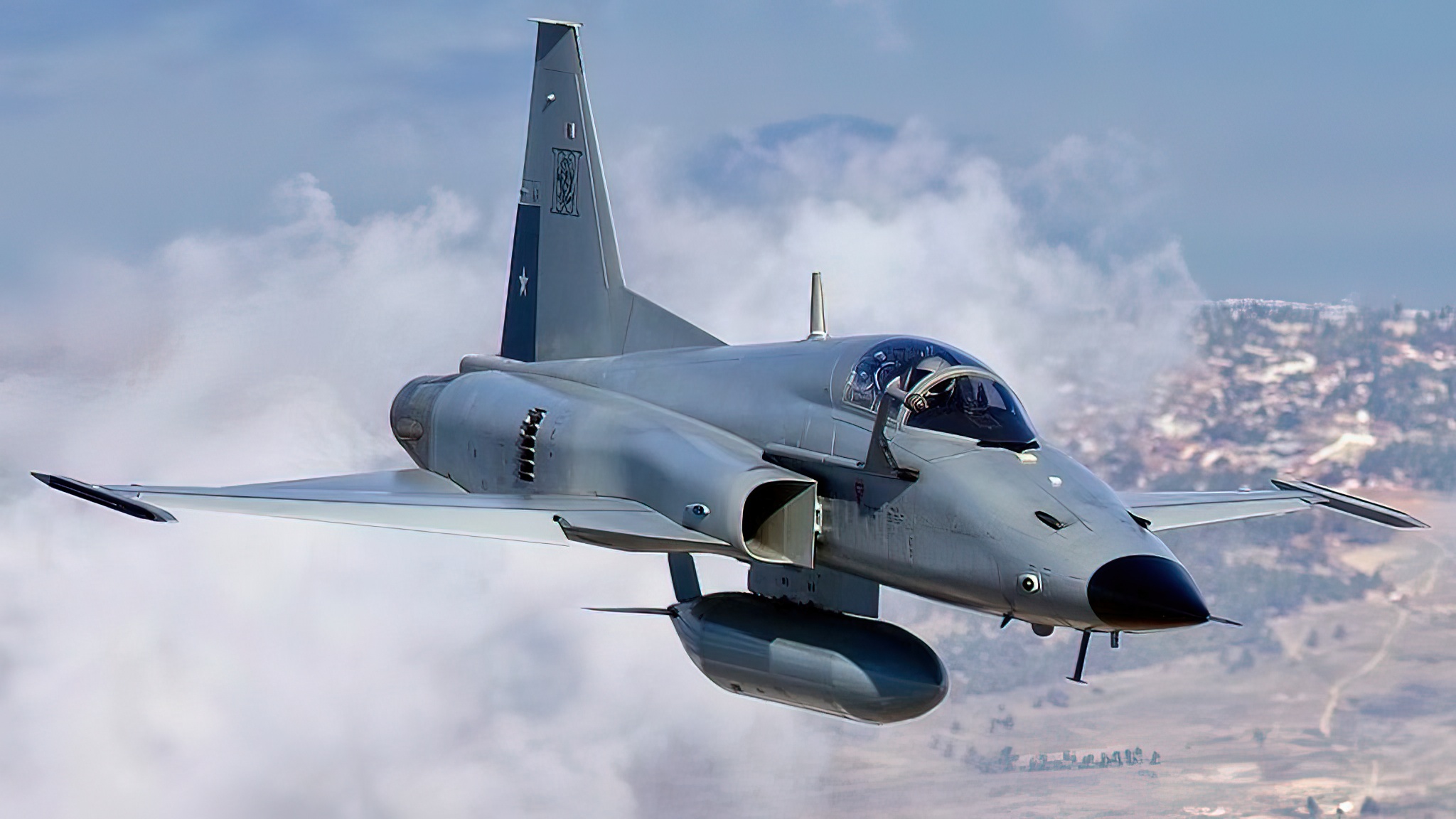
Elbit assisted in the implementation of similar schemes in Chile and Brazil. The Chilean modification, known as the F-5 Tiger III Plus, included a new Elta EL/M-2032 radar as well as other enhancements. The Brazilian program, renamed F-5M, has a new Grifo-F radar as well as many avionics and cockpit upgrades, including the Dash helmet. The F-5M is now outfitted with new weapon systems such as the Beyond Visual Range Derby missile, the Python IV short-range air-to-air missile, the SMKBs smart bomb, and a variety of other weaponry.
Operational History
The initial contract for the production F-5A was obtained in 1962, with the Royal Norwegian Air Force placing the first foreign order on February 28, 1964. On 30 April that year, it entered service with the USAF’s 4441st Combat Crew Training School, which was responsible for training pilots and ground crew for customer nations, despite the fact that the aircraft was not meant to be used in considerable numbers by the USAF itself.
This changed in 1965 when testing and limited deployment began. During the summer of 1965, preliminary combat assessment of the F-5A commenced at the Air Proving Ground Center, Eglin AFB, Florida, under project Sparrow Hawk, with one airframe lost due to a pilot mistake on June 24.
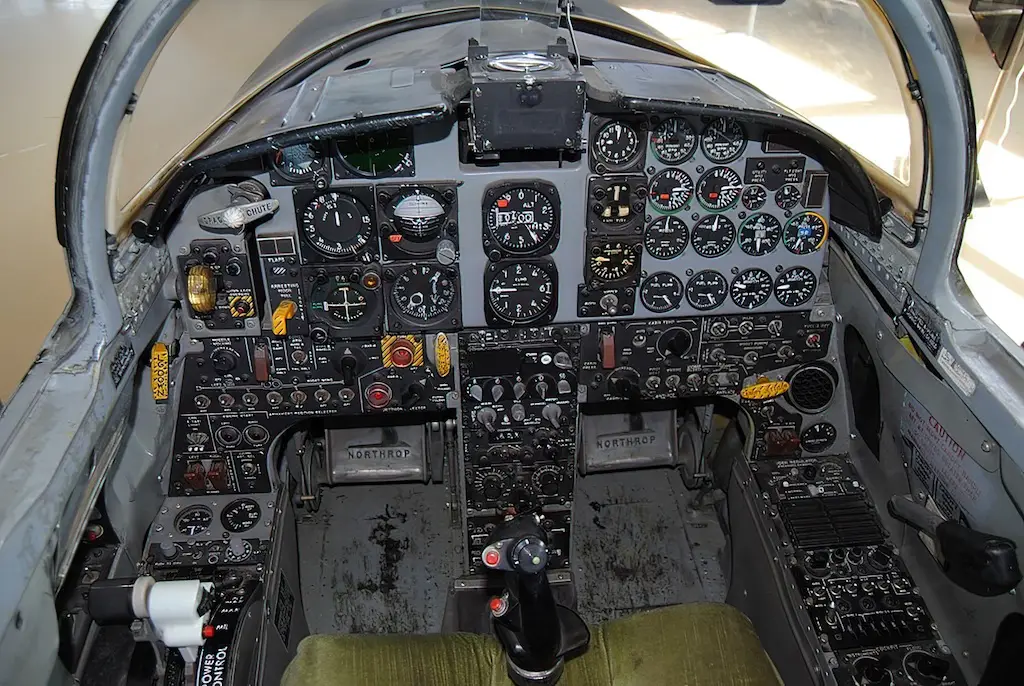
The USAF conducted a five-month combat evaluation of the F-5A dubbed Skoshi Tiger in October 1965. After being modified with probe and drogue aerial refueling equipment, armor, and upgraded instrumentation, twelve aircraft were delivered for trials to the 4503rd Tactical Fighter Squadron and reclassified as the F-5C.
Sorties
Over the next six months, they flew over 2,600 sorties over South Vietnam from the 3rd Tactical Fighter Wing at Bien Hoa, as well as from Da Nang Air Base, where missions were undertaken over Laos. In Vietnam, nine aircraft were lost, seven due to hostile ground fire, and two due to operational reasons.
Despite being hailed a success, the aircraft is typically judged as capable as a ground-attack aircraft as the F-100, but with a shorter range. The program was viewed as a political ploy to encourage the export of more F-5s rather than a serious study of the type for US service. From April 1966, the aircraft continued to operate as the 10th Fighter Commando Squadron, with a total of 17 aircraft.
In Air combat
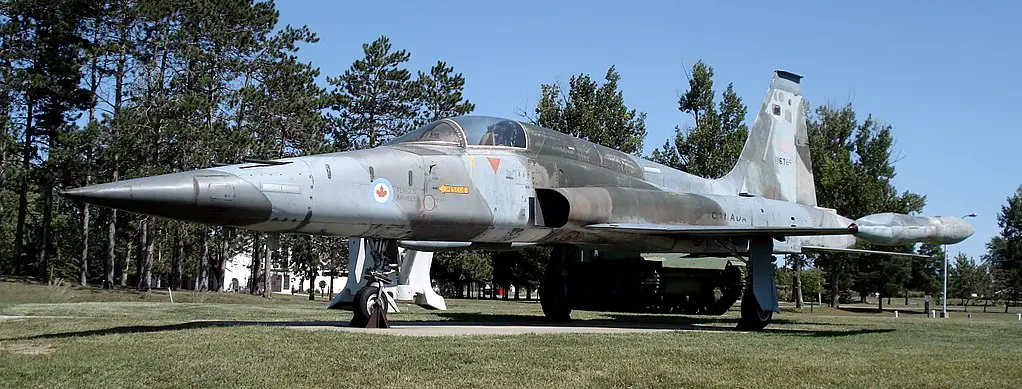
In June 1967, the surviving aircraft of the 10th FCS were delivered to South Vietnam’s air force, which had previously relied on Cessna A-37 Dragonfly and Douglas A-1 Skyraider attack aircraft. The new VNAF squadron was known as the 522nd. The Vietnamese president had first requested F-4 Phantoms used by the Americans, but the VNAF flew largely ground support because communist troops utilized no opposition aircraft over South Vietnam. When Communist troops took over Bien Hoa, several of the aircraft were captured and utilized operationally by the NVAF, particularly against the Khmer Rouge.
In air combat, the F-5 would have appeared to be a good match for the similar MiG-21 due to its performance, agility, and size; however, US policy was to utilize heavy, quicker, and longer-range aircraft like the Republic F-105 Thunderchief and McDonnell Douglas F-4 Phantom II over North Vietnam. When the NVA defeated South Vietnam on April 30, 1975, they captured 41 F-5s, and the Russians were offered “their pick” of the captured equipment, at which point they quickly loaded up one complete F-5E, two spare engines, all spare parts, and all ground support equipment onto one of their waiting cargo ships.
Topgun
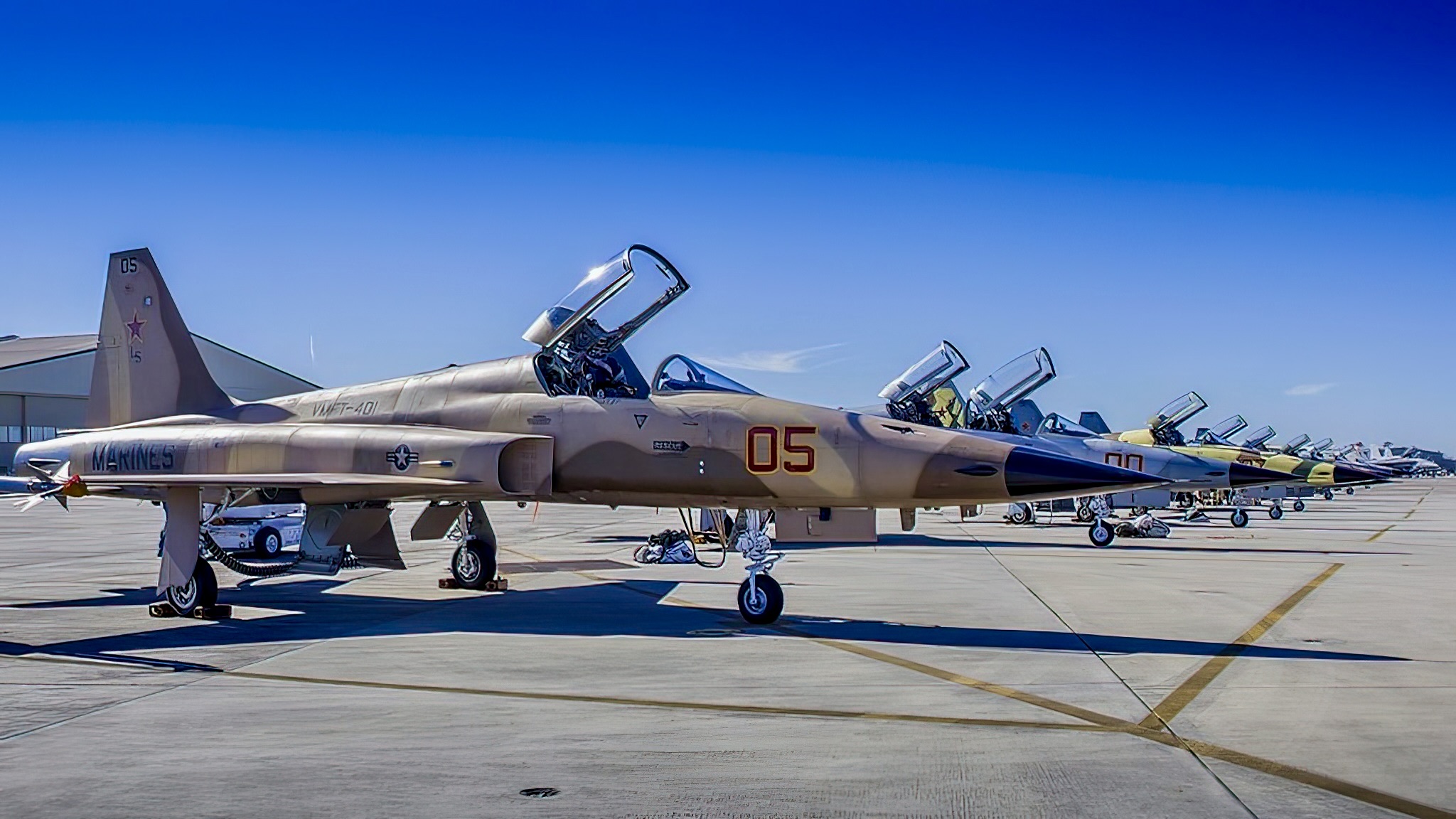
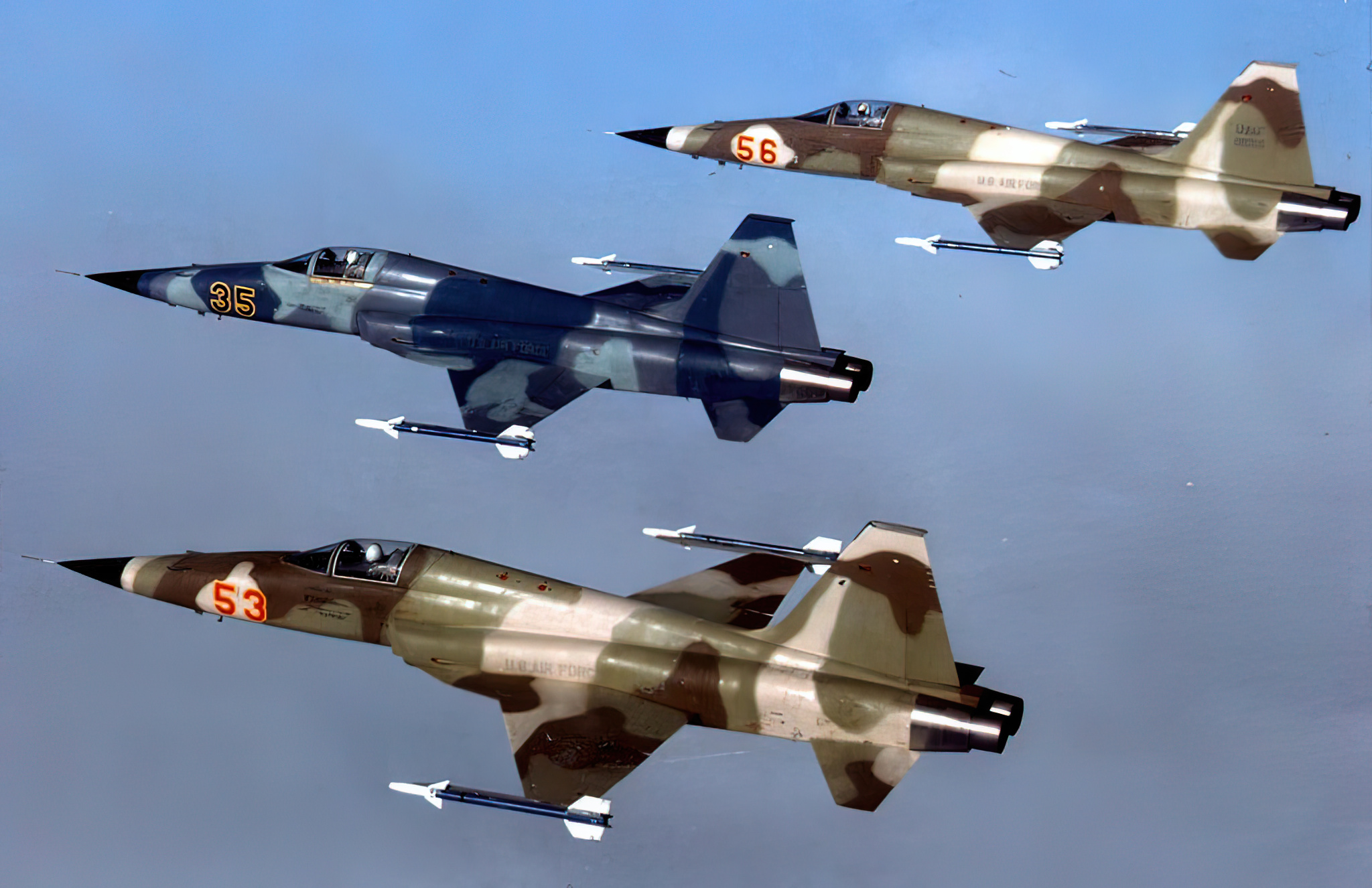
From 1975 through 1990, the F-5E was assigned to the 64th and 65th Aggressor Squadrons at Nellis Air Force Base in Nevada, as well as the 527th Aggressor Squadron at RAF Alconbury in the United Kingdom and the 26th Aggressor Squadron at Clark Air Force Base in the Philippines. In 1989, the United States Marine Corps purchased ex-USAF versions to replace their F-21s at Marine Corps Air Station Yuma.
When the Naval Fighter Weapons School (TOPGUN) was based at NAS Miramar in California, the F-5E was heavily used. When Topgun was transferred to the Naval Strike and Air Warfare Center at NAS Fallon, Nevada, the command divested itself of the F-5, instead relying on VC-13 (renamed VFC-13 and already using F-5s) to deploy their F-5s as opponent aircraft. Former opponent units such as VF-43 at NAS Oceana, VF-45 at NAS Key West, VF-126 at NAS Miramar, and VFA-127 at NAS Lemoore have also used the F-5 in support of Dissimilar Air Combat Training.
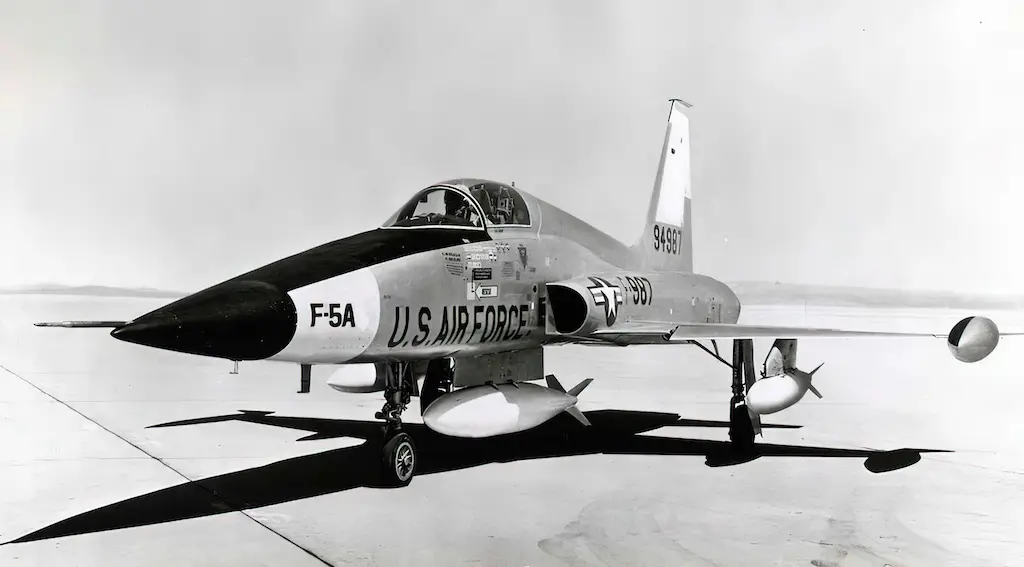
The United States Navy’s F-5 fleet is being refurbished, with 36 low-hour F-5E/Fs purchased from Switzerland in 2006. These were modified as F-5N/Fs with enhanced avionics and other features. The F-5 is now flown by VFC-13 at NAS Fallon, Nevada, and VFC-111 at NAS Key West, Florida. [6] VFC-111 currently operates 18 Northrop F-5N/F Tiger-IIs, 17 of which are single-seater F-5Ns and the remainder a twin-seater F-5F, dubbed “FrankenTiger” and one of only three in service with the USN, as a result of grafting the older front half fuselage of the F-5Fs into the back half fuselage of the newer low-hours F-5Es acquired from the Swiss Air Force
TOP GUN: F-5 vs MiG-28s
The baddie planes in the 1986 top gun movie were actually F-5s. Funny enough, one of the characters claims that F-5 cannot compete with the MiG-28s… despite it literally being the same aircraft. We’re guessing the black paint and commie insignia improve the aircraft’s performance somehow.
For some reason, the USSR was hesitant to send over its most advanced air superiority fighter (imagine that), so the filming crew had to improvise.
The F-5 planes utilized in the film were standard USAF undergraduate pilot training Northrop T-38 Talon twin-engine, tandem-seat fighters from the 1950s. These are still used at AETC (Air Education and Training Command) for student pilots who demonstrate competency, skill, and aggressiveness in order to be assigned to a USAF fighter Squadron once their wings have been obtained.
The same aircraft shown in the film “Top Gun” are being flown every day by new student pilots for the United States Air Force. Holloman and Beale T-38 Talons are still painted black, with red USAF tail flash, aircraft designation numbers, and the commander’s name as a homage to the film. These jets are dependable, inexpensive to maintain, and simple to learn fundamental combat tactics, yet still capable of breaking into supersonic flight with a modest nose down or level flight.