BREAKING: Elon Musk DOES IT AGAIN — Tesla Hospitals Will Be Built in 20 of the 50 US States. They Will Be Free for the Elderly, Children, and Cancer Patients. The Project Will Be Implemented by Mid-2026
Austin, Texas — November 19, 2025 — Elon Musk, the visionary CEO of Tesla and SpaceX, has once again redefined the boundaries of innovation and philanthropy with a bombshell announcement that could revolutionize American healthcare. In a surprise keynote at Tesla’s annual shareholder meeting, streamed live to millions on X, Musk unveiled plans to construct 20 state-of-the-art “Tesla Hospitals” across the United States by mid-2026. These facilities, fully funded by the electric vehicle giant, will offer free comprehensive care to the nation’s most vulnerable: the elderly, children under 18, and cancer patients. “Healthcare shouldn’t be a luxury—it’s the foundation of human progress,” Musk declared, his signature intensity amplified by a holographic projection of Optimus robots assisting in mock surgeries. “We’re not just building cars; we’re building a future where no one dies waiting for help.”
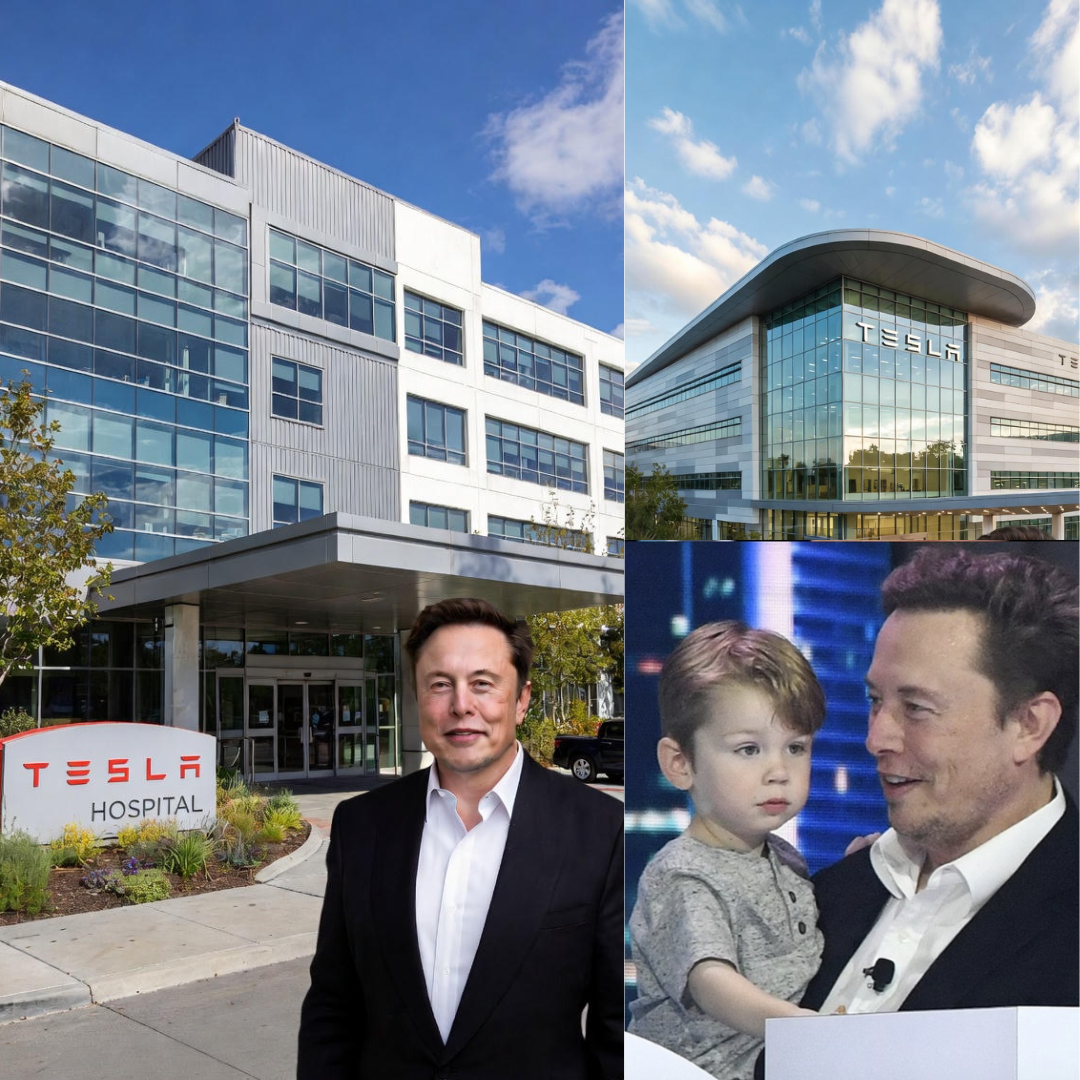
The initiative, dubbed “Tesla Health Nexus,” marks Musk’s boldest foray into the medical sector since Tesla’s on-site employee clinics debuted in 2018. Drawing from the company’s expertise in AI, robotics, and sustainable energy, the hospitals will integrate Tesla’s humanoid robot Optimus as a core workforce member. As Musk explained in a post-announcement interview with CNBC, “Optimus isn’t here to replace doctors—it’s here to empower them with superhuman precision. Imagine surgeries performed 24/7 without fatigue, diagnostics faster than any human scan.” This vision builds on Musk’s recent comments during a November 14 investor call with Baron Capital, where he envisioned Optimus delivering “the best surgeons to literally everyone,” transcending geographic barriers. Early prototypes, already tested in Tesla’s Fremont labs, have demonstrated error-free precision in simulated procedures, from tumor removals to pediatric orthopedics.
The 20 selected states—spanning California, Texas, Florida, New York, and emerging tech hubs like Nevada and Georgia—were chosen based on population density, healthcare deserts, and Tesla’s existing Gigafactory footprints. Each 500-bed facility will feature solar-powered roofs generating 100% of their energy needs, EV charging stations integrated into ambulance bays, and AI-driven triage systems that prioritize patients in real-time. Free services will include everything from routine checkups and vaccinations to advanced oncology treatments and geriatric palliative care, with no copays or insurance hurdles. “Cancer took too many from us too soon—my first child, friends, colleagues,” Musk shared emotionally, referencing personal losses. “This is personal. By mid-2026, we’ll have the first 10 operational, scaling to 20 as Optimus rolls out.”
Funding the $50 billion project won’t strain Tesla’s coffers, thanks to the recent approval of Musk’s staggering $1 trillion compensation package by shareholders on November 7. “This isn’t charity; it’s an investment in humanity’s longevity,” Musk quipped, echoing his xAI ethos of accelerating scientific discovery. Partnerships with Neuralink for brain-computer interfaces and the Mayo Clinic for protocol validation will ensure cutting-edge standards. Critics, however, raise eyebrows at the timeline. Healthcare experts like Dr. Atul Gawande warn of regulatory hurdles: “Building hospitals is one thing; staffing them with FDA-approved robots is another.” Musk dismissed such concerns on X: “Regulations evolve with tech—Optimus will be in trials by Q2 2026.”
The announcement sent Tesla shares surging 8% in after-hours trading, while healthcare stocks dipped amid fears of disruption. President Donald Trump, a Musk ally, praised the move from Mar-a-Lago: “Elon’s making America healthy again—faster than any bureaucrat ever could.” On the flip side, progressive lawmakers like Sen. Elizabeth Warren called for oversight, tweeting, “Billionaire benevolence is no substitute for universal coverage.” Yet, public reaction leans overwhelmingly positive: #TeslaHospitals trended globally within minutes, with users sharing stories of loved ones lost to unaffordable care.
This isn’t Musk’s first healthcare swing. During the 2020 pandemic, Tesla sourced and delivered over 1,200 ventilators to U.S. hospitals, despite early controversies over device types. And Tesla’s vehicle HEPA filters, touted as “hospital-grade” since 2020, have quietly improved air quality for millions. Now, with Optimus poised to bridge the $4.5 trillion U.S. healthcare gap, Musk is betting big on a symbiotic fusion of tech and medicine.
As construction blueprints circulate—sleek, Cybertruck-inspired structures with drone delivery pads—the world watches. “We’ve solved sustainable transport and space travel,” Musk concluded. “Healthcare? That’s next. And it’ll be free for those who need it most.” By mid-2026, Tesla Hospitals could stand as monuments to Musk’s relentless drive, proving once again that when Elon does it, he does it big.