Birmingham, Alabama – October 22, 2025 – In a poignant display of community solidarity and unwavering love, hundreds of students from Cleveland High School gathered at the University of Alabama at Birmingham (UAB) Hospital on Tuesday evening, lining the sterile hallways in a silent tribute to their classmate, 18-year-old Kimber Mills. The senior cheerleader, fatally wounded in a senseless shooting over the weekend, was moments away from undergoing surgery to donate her organs, ensuring her legacy of kindness would live on through the lives she would save.
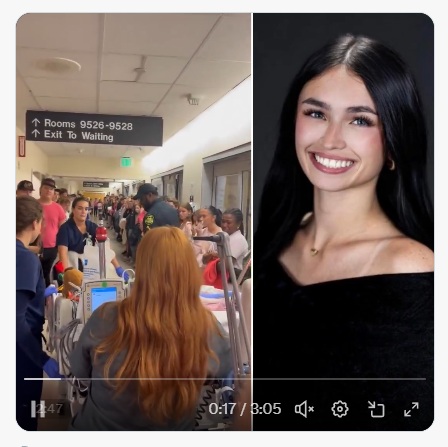
The event, known as an Honor Walk, unfolded around 7 p.m. as medical staff, family, and friends formed a human corridor from the intensive care unit to the operating room. Kimber, a vibrant spirit with a radiant smile and boundless energy, had been declared brain dead following a gunshot wound to the head sustained on October 18 during a gathering at a wooded area known locally as “The Pit” near Clay-Palmerdale Road in east Jefferson County. What began as a casual bonfire party for teens turned tragic when gunfire erupted, leaving Kimber critically injured alongside two others—Levi Sanders, 18, and Silas McCay, 21—who survived with serious wounds.
Jefferson County deputies swiftly arrested 27-year-old Steven Whitehead early Sunday morning in connection with the shooting, charging him with capital murder and attempted murder. As investigators piece together the events that shattered a tight-knit community, Kimber’s family chose to channel their grief into an act of profound generosity. “Once they declare her brain dead, she will be an organ donor,” Kimber’s sister, Ashley Mills, had shared on social media days earlier, a decision that aligned perfectly with the young woman’s compassionate heart.
Dressed in pink—Kimber’s favorite color—waves of Cleveland High School students poured into the hospital, many still wearing their cheer uniforms or carrying pom-poms in her honor. The hallways, typically echoing with the beeps of monitors and hurried footsteps, fell into a reverent hush as Kimber’s bed was wheeled through. Tears streamed down faces young and old; hugs were exchanged in clusters, and whispers of shared memories filled the air. “It was a lot of tears, hugs, and goodbyes,” one classmate, Marilu Valdez, recounted to reporters outside. “She was the girl who lit up every room—always cartwheeling through the gates with pom-poms flying. To see her like this… it broke my heart, but knowing she’s giving others a chance at life? That’s pure Kimber.”
Leading the procession, Kimber’s brother, Michael Mills, paused to offer a heartfelt prayer that resonated through the corridor. “Heavenly Father, thank you, Lord, for this young woman, my sister—I love her so much,” he said, his voice steady despite the sorrow. “I pray for swift hands of the surgeons, that we do what needs to be done to save other lives. No fear, no sadness, no hatred. Thank you, Lord, for Kimber. Please protect us in these uncertain times.” Medical staff, clad in scrubs and stethoscopes, joined the line, their presence a quiet acknowledgment of the sacred transition unfolding.
Kimber was no stranger to dreams deferred too soon. A straight-A student and captain of the cheer squad, she had her future mapped out: acceptance to the University of Alabama next fall, followed by nursing school to care for others just as she had always done. Friends described her as “friendly and sweet, with a little spunk to her step”—the kind of teen who organized fundraisers for local charities and never missed a chance to uplift a struggling peer. “She had this fire,” Ashley Mills said, wiping away tears. “Even in her final moments, she’s making a sacrifice so others can live.”
The Honor Walk, a tradition in hospitals nationwide to celebrate organ donors, took on an even greater magnitude here. Legacy of Hope, Alabama’s organ procurement organization, coordinated the process, matching Kimber’s viable organs—potentially her heart, lungs, liver, kidneys, and more—to desperate recipients across the state and beyond. One donor like Kimber can save up to eight lives and enhance dozens more through tissue donation, a statistic that offered scant comfort but immense purpose to her grieving loved ones.
As the procession reached the operating room doors, the crowd lingered, unwilling to let go entirely. A vigil held the night before at Cleveland High School had drawn teachers, alumni, and neighbors, filling the football field with candles and chants of “Love like Kimber.” GoFundMe campaigns for the family have already raised tens of thousands, with messages pouring in from as far as Europe. “She didn’t tiptoe through those gates—she cartwheeled,” one tribute read, capturing the essence of a life cut short at 18.
In the wake of this tragedy, Cleveland—and indeed all of Alabama—grapples with the scourge of gun violence that claims far too many young lives. Yet amid the pain, Kimber Mills emerges as a beacon of hope. Her orga